Millions of taxpayers have until July 10 to claim an IRS refund.
📍 USA
|
By: Concernedcitizen
|
Jul 10, 2026
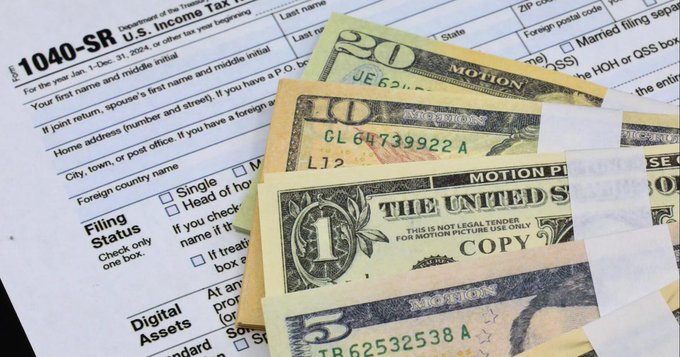
The July 10, 2026, deadline is a major milestone for tens of millions of U.S. taxpayers. It marks the final day to file a protective refund claim to potentially claw back IRS penalties and underpayment interest charged during the pandemic. This window exists due to a major federal court ruling (Kwong v. United States), which determined that the IRS should not have penalized taxpayers for late filings or payments during the official COVID-19 national disaster window (January 20, 2020, to July 10, 2023). Under tax law, taxpayers generally have a three-year statute of limitations from the disaster relief deadline to claim a refund—making July 10, 2026, the absolute cutoff. Who is Impacted?You may be eligible to get money back if you fit into any of the following categories for the 2019, 2020, 2021, or 2022 tax years:Late Filers/Payers: You filed your return or paid your taxes late during the pandemic window and were hit with failure-to-file or failure-to-pay penalties. Estimated Tax Penalties: You were charged penalties for underpaying estimated taxes. Accumulated Interest: You were charged interest on those penalties, or the interest began accruing earlier than it legally should have. International Filings: You faced hefty penalties for late international information returns (like Form 5471 or 3520). The Catch: It is a "Protective" ClaimThe IRS is currently appealing the court ruling and is not handing out checks just yet. Because the litigation is ongoing, you must file what is called a protective claim. Why you must act now: Filing a protective claim effectively "freezes" the clock for you. If the courts ultimately rule against the IRS, only the taxpayers who filed a claim by the July 10, 2026, deadline will get their refunds. If you miss the deadline, you lose your right to the money forever—regardless of how the court case ends. How to File Before the DeadlineIf you are requesting a refund for paid penalties or interest, you must use IRS Form 843 (Claim for Refund and Request for Abatement). Note that you need to file a separate Form 843 for each individual tax year you are claiming.
1.Check your tax transcripts:
Step 1.Log into your IRS Online Account and pull your tax account transcripts for the 2019–2022 tax years. Look for specific line items showing "penalty" or "interest" charges assessed during the pandemic.2.Download the correct Form 843:
Step 2.Ensure you are using the current version of Form 843 (redesigned in late 2024). Fill out your personal details, the specific tax year, and the exact penalty amounts you want refunded.3.Add the mandatory legal phrasing:
Step 3.If filing by paper, write "Protective Refund Claim Pursuant to Kwong Case" clearly across the top of the form. On Line 8 (the explanation box), explicitly state that you are preserving your rights based on the Kwong v. United States ruling regarding COVID-19 disaster period extensions.4.Submit online or postmark by mail:Step 4.Online: Individual taxpayers with an IRS Online Account can submit Form 843 electronically through the IRS "Mobile-friendly forms" page (only for fully paid penalties).Mail: If you are a business, have unpaid penalties, or lack an online account, you must mail the paper form. Send it via certified mail with a return receipt so you have proof it was postmarked by July 10.
1.Check your tax transcripts:
Step 1.Log into your IRS Online Account and pull your tax account transcripts for the 2019–2022 tax years. Look for specific line items showing "penalty" or "interest" charges assessed during the pandemic.2.Download the correct Form 843:
Step 2.Ensure you are using the current version of Form 843 (redesigned in late 2024). Fill out your personal details, the specific tax year, and the exact penalty amounts you want refunded.3.Add the mandatory legal phrasing:
Step 3.If filing by paper, write "Protective Refund Claim Pursuant to Kwong Case" clearly across the top of the form. On Line 8 (the explanation box), explicitly state that you are preserving your rights based on the Kwong v. United States ruling regarding COVID-19 disaster period extensions.4.Submit online or postmark by mail:Step 4.Online: Individual taxpayers with an IRS Online Account can submit Form 843 electronically through the IRS "Mobile-friendly forms" page (only for fully paid penalties).Mail: If you are a business, have unpaid penalties, or lack an online account, you must mail the paper form. Send it via certified mail with a return receipt so you have proof it was postmarked by July 10.

About NKOMODE.COM:
Hi, Kojo Annan here. I started this blog because I believe everyone has a story and I'm here to tell it. Thanks for being part of the Journey. Advertise with us.
Views:
1,546