Meta says it's facing $1.4T in penalties in teen mental health case
📍 USA
|
By: Concernedcitizen
|
Jul 08, 2026
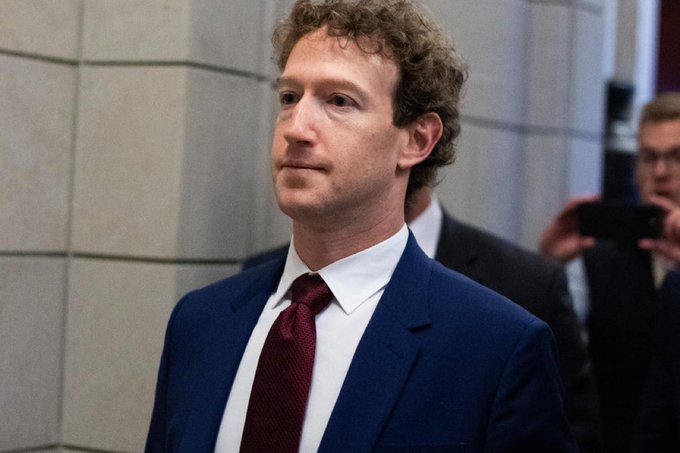
In what is shaping up to be an unprecedented legal showdown for the tech industry, Meta Platforms has revealed in a court filing that four U.S. states are seeking an astonishing $1.4 trillion in financial penalties against the company.
The eye-watering figure—disclosed in a July 6, 2026 court response—nearly equals Meta's entire current market capitalization of approximately $1.5 trillion.
The disclosure comes just weeks before an August federal trial in Oakland, California, where the attorneys general of California, Colorado, Kentucky, and New Jersey will argue that Meta intentionally designed Facebook and Instagram to addict children and teenagers, while actively misleading the public about the severe mental health risks associated with their products.
How Did the Penalties Reach $1.4 Trillion?
The astronomical fine was calculated by multiplying the estimated number of teenagers and minor users allegedly impacted by the platforms by the statutory financial penalties permitted under each state's respective consumer protection laws.
While the exact mathematical breakdown remains under seal, state prosecutors argue that every single day a minor was exposed to unfair or deceptive engagement features constitutes an independent legal violation.
Meta has forcefully pushed back against the demand, calling the number legally and factually groundless.
“A sanction of that size has no analog in the history of consumer protection enforcement,” Meta stated in its response, arguing that the states' calculations are entirely unsupported by actual evidence.
The Legal Floodgates Are Open
The upcoming August trial before U.S. District Judge Yvonne Gonzalez Rogers is only one piece of a massive, multi-front legal crisis confronting social media corporations over youth safety. Meta, ByteDance (TikTok), Alphabet (YouTube), and Snap Inc. (Snapchat) face more than 3,300 individual and district lawsuits nationwide.
The pressure on Meta has intensified following several recent legal defeats:
March 2026 California Verdict: A Los Angeles jury found Meta and Google negligent in their platform designs, awarding a young woman $6 million in damages after she proved Instagram and other apps contributed to severe anxiety, depression, and body dysmorphia as a minor.
New Mexico Verdict: A state jury slapped Meta with a $375 million judgment after finding the company misled consumers regarding child safety protections.
Kentucky Settlement: A Kentucky school district secured a combined $27 million pre-trial settlement from several major social platforms in June.
While competitors like TikTok and YouTube have increasingly opted to settle individual addiction cases out of court to avoid unpredictable juries, Meta's upcoming multi-state trial will put its internal research and platform design choices under intense public scrutiny.
Features on Trial: Design Over Content
The core of the states' case does not focus on the specific content users see, but rather the underlying manipulative design architecture of the apps. Prosecutors will argue that Meta purposefully engineered features like algorithmic recommendation engines, infinite scrolling, push notifications, and "like" counters to hijack adolescent dopamine loops and maximize screen time at the expense of developing brains.
Furthermore, the states accuse Meta of violating the federal Children's Online Privacy Protection Act (COPPA) by knowingly collecting data on children under the age of 13 without verifiable parental consent.
California Attorney General Rob Bonta emphasized the state's resolve heading into August, accusing Meta of consistently prioritizing corporate profits over child well-being and promising to hold the tech giant fully accountable for its alleged role in fueling the ongoing youth mental health crisis.
The eye-watering figure—disclosed in a July 6, 2026 court response—nearly equals Meta's entire current market capitalization of approximately $1.5 trillion.
The disclosure comes just weeks before an August federal trial in Oakland, California, where the attorneys general of California, Colorado, Kentucky, and New Jersey will argue that Meta intentionally designed Facebook and Instagram to addict children and teenagers, while actively misleading the public about the severe mental health risks associated with their products.
How Did the Penalties Reach $1.4 Trillion?
The astronomical fine was calculated by multiplying the estimated number of teenagers and minor users allegedly impacted by the platforms by the statutory financial penalties permitted under each state's respective consumer protection laws.
While the exact mathematical breakdown remains under seal, state prosecutors argue that every single day a minor was exposed to unfair or deceptive engagement features constitutes an independent legal violation.
Meta has forcefully pushed back against the demand, calling the number legally and factually groundless.
“A sanction of that size has no analog in the history of consumer protection enforcement,” Meta stated in its response, arguing that the states' calculations are entirely unsupported by actual evidence.
The Legal Floodgates Are Open
The upcoming August trial before U.S. District Judge Yvonne Gonzalez Rogers is only one piece of a massive, multi-front legal crisis confronting social media corporations over youth safety. Meta, ByteDance (TikTok), Alphabet (YouTube), and Snap Inc. (Snapchat) face more than 3,300 individual and district lawsuits nationwide.
The pressure on Meta has intensified following several recent legal defeats:
March 2026 California Verdict: A Los Angeles jury found Meta and Google negligent in their platform designs, awarding a young woman $6 million in damages after she proved Instagram and other apps contributed to severe anxiety, depression, and body dysmorphia as a minor.
New Mexico Verdict: A state jury slapped Meta with a $375 million judgment after finding the company misled consumers regarding child safety protections.
Kentucky Settlement: A Kentucky school district secured a combined $27 million pre-trial settlement from several major social platforms in June.
While competitors like TikTok and YouTube have increasingly opted to settle individual addiction cases out of court to avoid unpredictable juries, Meta's upcoming multi-state trial will put its internal research and platform design choices under intense public scrutiny.
Features on Trial: Design Over Content
The core of the states' case does not focus on the specific content users see, but rather the underlying manipulative design architecture of the apps. Prosecutors will argue that Meta purposefully engineered features like algorithmic recommendation engines, infinite scrolling, push notifications, and "like" counters to hijack adolescent dopamine loops and maximize screen time at the expense of developing brains.
Furthermore, the states accuse Meta of violating the federal Children's Online Privacy Protection Act (COPPA) by knowingly collecting data on children under the age of 13 without verifiable parental consent.
California Attorney General Rob Bonta emphasized the state's resolve heading into August, accusing Meta of consistently prioritizing corporate profits over child well-being and promising to hold the tech giant fully accountable for its alleged role in fueling the ongoing youth mental health crisis.

About NKOMODE.COM:
Hi, Kojo Annan here. I started this blog because I believe everyone has a story and I'm here to tell it. Thanks for being part of the Journey. Advertise with us.
Views:
3,092