 (2).jpg)
 4 hours ago
2
4 hours ago
2
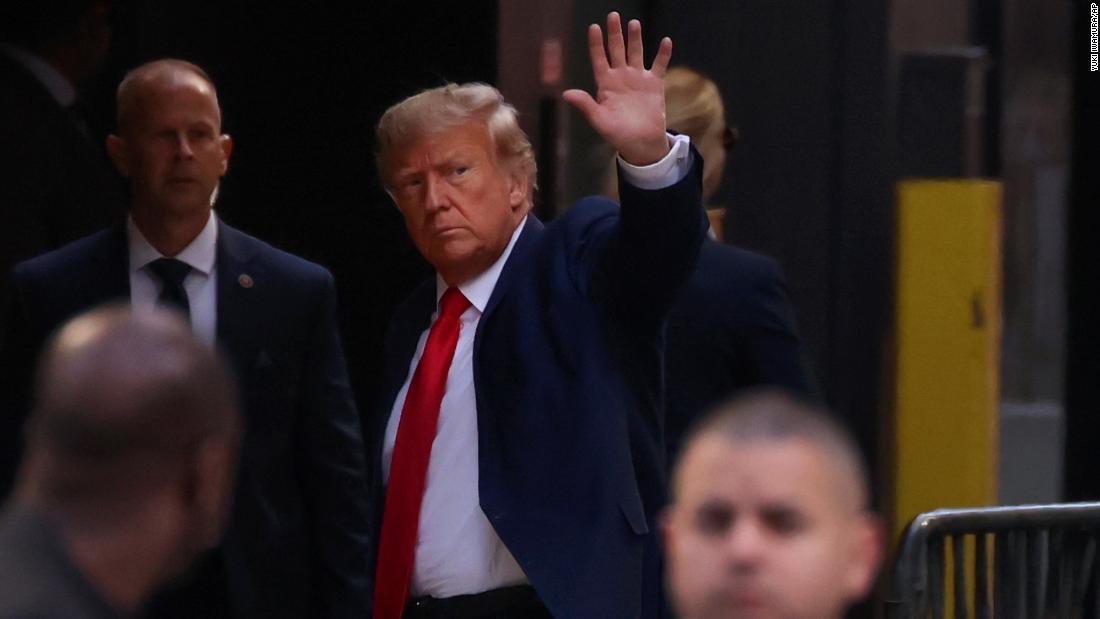
Donald Trump appeared on CNN for the first time in his second presidential term on Sunday, giving a phoner on Jake Tapper’s show to remember the late South Carolina Senator Lindsey Graham. But as Tapper pressed the President on Iran and other issues, and invited him back for a more wide-ranging discussion, Trump responded “we’re trying to have CNN go in a normal path, and we’ll do that.”
“Well, I‘m on a normal path right here, sir, and I appreciate your time,” Tapper responded. “Thank you for calling in.”
The comment raised some eyebrows across the news business. Who was the “we” in this case? The U.S. government? Trump and Paramount CEO David Ellison, who is trying to acquire Warner Bros. Discovery in a $111 billion megadeal? The comment raised more questions than it answered, with a producer at a CNN competitor noting that Tapper met with Paramount CEO David Ellison earlier this year.
Inside CNN, suffice it to say, anxiety has reigned supreme in recent months, even as CEO Mark Thompson has tried to steady the ship and keep staff on track, while acknowledging internally in staff meetings that he isn’t sure what will happen next.
Perhaps it came up in Sun Valley Idaho last week, where CBS News editor-in-chief Bari Weiss was in attendance alongside CBS Mornings anchor Gayle King, as well as CNN anchor (and former CBS Newser) Anderson Cooper, and Erin Burnett, who is someone that White House officials allegedly floated as someone who could be replaced if new ownership takes over.
Inside the network there are differing views on the pending deal, which will inevitably see CNN and CBS News merged in some capacity, perhaps with Weiss in some high-level editorial role, perhaps with another executive involved to make sure things run smoothly. The Hollywood Reporter spoke to staffers at CNN and CBS News, as well as their corporate owners, most of whom expressed trepidation at the all-but-certain changes.
There are staffers uncomfortable with the politics of the deal, worried that political interference could alter CNN’s coverage in a meaningful way. One staffer cited CNN chief legal correspondent Paula Reid’s exit for MS NOW as an example, though the specific reasons for her decision are not entirely clear. CBS News, for what it’s worth, has consistently denied any sort of political pressure on its coverage, and routinely points to tough, critical reporting of the Trump administration.
There are also staffers that are simply afraid of what’s happening at CBS coming to CNN, with one CNNer describing the broadcast network’s moves under Weiss as “chaotic” and “weird.” CNN is a vastly larger organization than CBS News, and any chaos would have real repercussions to its ability to operate.
Finally, of course, there are the ambitious optimists, people betting that fresh leadership will shake CNN out of it slumber (and give themselves a high-profile role to help achieve those goals). Any large news company has ambitious executives and journalists seeking money, acclaim or responsibility, and a shakeup like the one that may be coming is an opportunity some will find hard to resist.
Of course such internal gossip is largely irrelevant to the business of CNN.
The lawsuit filed Monday by a dozen states, led by California AG Rob Bonta, barely mentions CNN, though Bonta himself alluded to it in a press conference, telling assembled journalists in the shadow of the Hollywood sign that “this merger will mean fewer journalists informing the electorate. It will mean fewer opportunities for Americans to hear the full breadth of information and opinions on a subject, and then come to their own conclusions.”
In other words, Bonta is thinking about CNN, even if the states ultimately decided not to include news as a centerpiece of their case.
What the lawsuit did include was CNN’s presence as part of the larger bundle of basic cable channels that a combined Warners-Paramount would have, encompassing news (CNN), sports (TNT and TBS), kids and family (Nickelodeon and Cartoon Network) and general entertainment (MTV, Comedy Central, HGTV, etc). CNN, in other words, is seen as an antitrust threat only in the context of that larger bundle of channels.
A casual observer might think that CNN is largely irrelevant to the larger Paramount-WBD tie-up. After all, this is really about creating a mega studio, right?
But CNN is more important to the deal than it might seem at first glance, for two simple reasons: Politics, and debt.
The politics part is straightforward: President Trump has made it clear that finding a new owner for CNN is imperative, and Larry Ellison, the Oracle titan who is bankrolling his son’s takeover, at one point told Trump that Paramount would overhaul the channel if they were successful, according to the Wall Street Journal.
“No commitments from either David or Larry Ellison have been made to any government body, State AG or federal agency regarding the future of CNN or any other news property, other than the goal to deliver truth-based journalism,” a Paramount spokesperson told the Journal at the time, though it avoided the specific question of what Ellison told Trump, who is neither a government body, state AG or federal agency.
Reports earlier this month that Bonta had been seeking a divestiture of CNN as part of a deal to approve the transaction were dismissed by the AG at his press conference: “The gossip machine is on overdrive right now. People are saying things that have no relationship to the facts, to the truth,” he said.
But that doesn’t mean CNN isn’t relevant to the deal, and the debt shows why.
The combined Paramount-WBD will take on some $80 billion in debt (possibly more if they have to pay the ticking fee that kicks in after Sep. 30), and they will need all the cashflow they can to deleverage. CBS News is a break-even business, give or take, but that is decidedly not the case for CNN.
Quite simply, CNN is too important of a business to lose, if internal financial data from Warner Bros. Discovery is to be believed.
CNN is projected to have $1.8 billion in revenue in 2026, according to the SEC filing from January, rising to $1.9 billion in 2027, $2 billion in 2028 and $2.2 billion by 2030. CNN’s adjusted EBITDA in 2026 is estimated to be about $600 million, before falling to $500 million in 2027 and remaining flat at $600 million through 2030.
While CNN’s revenue is relatively modest compared to the rest of the WBD cable portfolio ($9.9 billion in 2026) its EBITDA is strong, with every other channel in its portfolio combining for $3.8 billion and expected to fall to $1.9 billion through 2030. CNN, by contrast, is expected to be flat in EBITDA in that same period.
To put it bluntly, the combined company will need CNN’s revenue and profits to help pay down that debt load, especially with the other channels on a downward trajectory financially.
And while Weiss has been tasked with reimagining CBS News for the digital age, many of her efforts so far have been shaking up the network’s linear programs. CNN is much farther along in its digital transformation, with Thompson, who led The New York Times‘ digital overhaul, attempting to do the same thing once more.
Thompson is said to have been laser-focused for the past year launching CNN’s digital subscription product, which is being spearheaded by his deputy Alex MacCallum. The service has picked up a number of exclusive shows, while also putting much of CNN’s digital report behind a light paywall.
CNN executives have said consistently that the service is meeting expectations, though an executive at a competing outlet noted that CNN seems to consistently be offering the annual subscription on a 40 percent discount.
WBD says that it expects “new platform revenue” (i.e. streaming) to account for $600 million of revenue for CNN by 2030. If CBS and CNN are to be reimagined for the digital age, CNN’s efforts will almost certainly need to be part of it, unless Paramount wants a repeat of 2022, when WBD and Chris Licht nixed the nascent CNN+ offering in favor of an ill-fated plan to bundle CNN into HBO Max.
The Paramount-Warners tie-up may be about creating a mega-film and TV studio (or about tentpole movies and cable TV consolidation, if you believe the AG lawsuit), and not about news, but news, and CNN in particular, is an important piece of the puzzle. The deal may not work without it.
And while Trump may want a “normal” CNN, the state of media is anything but.




 English (US) ·