
 1 hour ago
3
1 hour ago
3
U.S. officials say the historic nuclear energy deal between the U.S. and Saudi Arabia, signed by both governments this week, presents the possibility that uranium enrichment could eventually happen on Saudi Arabian soil while omitting a requirement for expanded oversight.
Opening the door to enrichment in Saudi Arabia without specific international safeguards in place has raised concern from nuclear proliferation experts.
And as President Donald Trump hunts for ways to expand on a landmark diplomatic breakthrough from his first administration, revelations about the contents of the deal are also sparking speculation that Riyadh's enrichment capabilities may ultimately be decided by its willingness to establish a diplomatic relationship with Israel.
On Thursday, President Trump seemed to throw a wrench into the newly struck energy deal -- which sources say doesn’t explicitly mention Israel -- by conditioning it on Riyadh joining the Abraham Accords, a series of bilateral agreements between Israel and Arab states that were initially signed during Trump's first term in office.
Trump wrote in a social media post that the deal with Saudi Arabia "will be approved, but is totally subject to Saudi Arabia joining the very respected and successful Abraham Accords."
The president also wrote in the post that there would be "no enrichment of material."
Both of the president's claims, that the Abraham Accords and a Saudi promise not to enrich were part of the deal, are not elements of the signed agreement, sources told ABC News.
Officials anticipate both matters could be resolved down the line. They say the nuclear cooperation agreement stipulates that the future of Saudi enrichment will be decided only after the U.S. carries out a two-year study to explore the possibility of its commercial viability compared to importing nuclear fuel, and that the administration can still decide against transferring enrichment technology while cooperating with Riyadh on building nuclear energy plants.
"It's just notable to me that we're making contingent Saudi enrichment ... on recognition of a relationship with Israel," said Richard Nephew, a former State Department and National Security Council official. "Maybe that works, but I don't know. It just seems to me that we're adding more complexity there, and I am at least a little bit suspicious that that will be harder to pull off."
Trump administration officials told ABC News they believe the contours of the agreement could give it more leverage over Riyadh.
The two-year study is set to wrap shortly before Trump's term expires, which administration officials say could give them an adequate runway to broker a normalization deal between Israel and Saudi Arabia.
"It could also be [that] the issue of normalization could also be shuttled into this supposed two-year ... discussion on the actual need for enrichment," said Simon Henderson, a senior fellow at the Washington Institute and expert in Gulf affairs.
White House press secretary Karoline Leavitt indicated on Thursday conversations with Saudi Arabia would continue.
"The president is always the final dealmaker," she said.
Saudi Arabia has not yet publicly responded to Trump's assertion about the Abraham Accords, but U.S. officials said they did not anticipate that it would derail the energy pact.
Riyadh came close to normalizing relations with Israel under the Biden administration, but that progress was derailed after Hamas' attacks on Oct. 7, 2023 and Israel's subsequent campaign in Gaza.
Since then, Saudi Arabia has consistently indicated that it would not sign onto the Abraham Accords unless a clear pathway to an independent Palestinian state is established, which Israel says would be an existential threat to its security.
Whether the Trump administration can overcome the impasse is unclear.
Why the deal is sparking proliferation concerns
The energy deal with between Riyadh and Washington is the product of months of negotiations, and Saudi Arabia managed to come away with several favorable terms that were once seen as non-starters by the U.S., sources said.
In addition to refusing to rule out uranium enrichment, officials say the Saudis also rejected what is known as the "Additional Protocol"-- a legal agreement that grants the International Atomic Energy Agency (IAEA) expanded inspection and monitoring authority.
The IAEA must approve the safeguards agreement struck between the U.S. and Saudi Arabia to ensure it is in compliance with the Nonproliferation Treaty, to which both countries are parties.
In response to a question from ABC News, the IAEA said it is "aware" of a "plan to ask the IAEA to implement verification measures in relation to this bilateral agreement."
The Agency's Board of Governors will then consider authorization for the safeguards agreement to be implemented, it said.
Riyadh's resistance of nuclear inspections in the Additional Protocol "is a red flag for future concerns and problems," said Kenneth Brill, the former U.S. ambassador to the IAEA's headquarters in Vienna.
"The U.S. should never have agreed to enrichment without a really strong inspections regime with the IAEA," he said.
The prospect of a covert weaponization effort undertaken by Saudi Arabia, Henderson said, "is the most glaring problem of the agreement."
The kingdom "seem[s] curiously averse to the Additional Protocol ... which rather suggests the Saudis have got something to hide," he said.
Secretary of State Marco Rubio told reporters in the Philippines on Wednesday that Saudi Arabia would not be able to convert the civil program to a weaponization effort.
"Suffice it to say that any agreement that we're going to make with any country in the world on civil nuclear energy is going to be one that will have safeguards in place to ensure that it can't be turned into a weapons program," Rubio said.
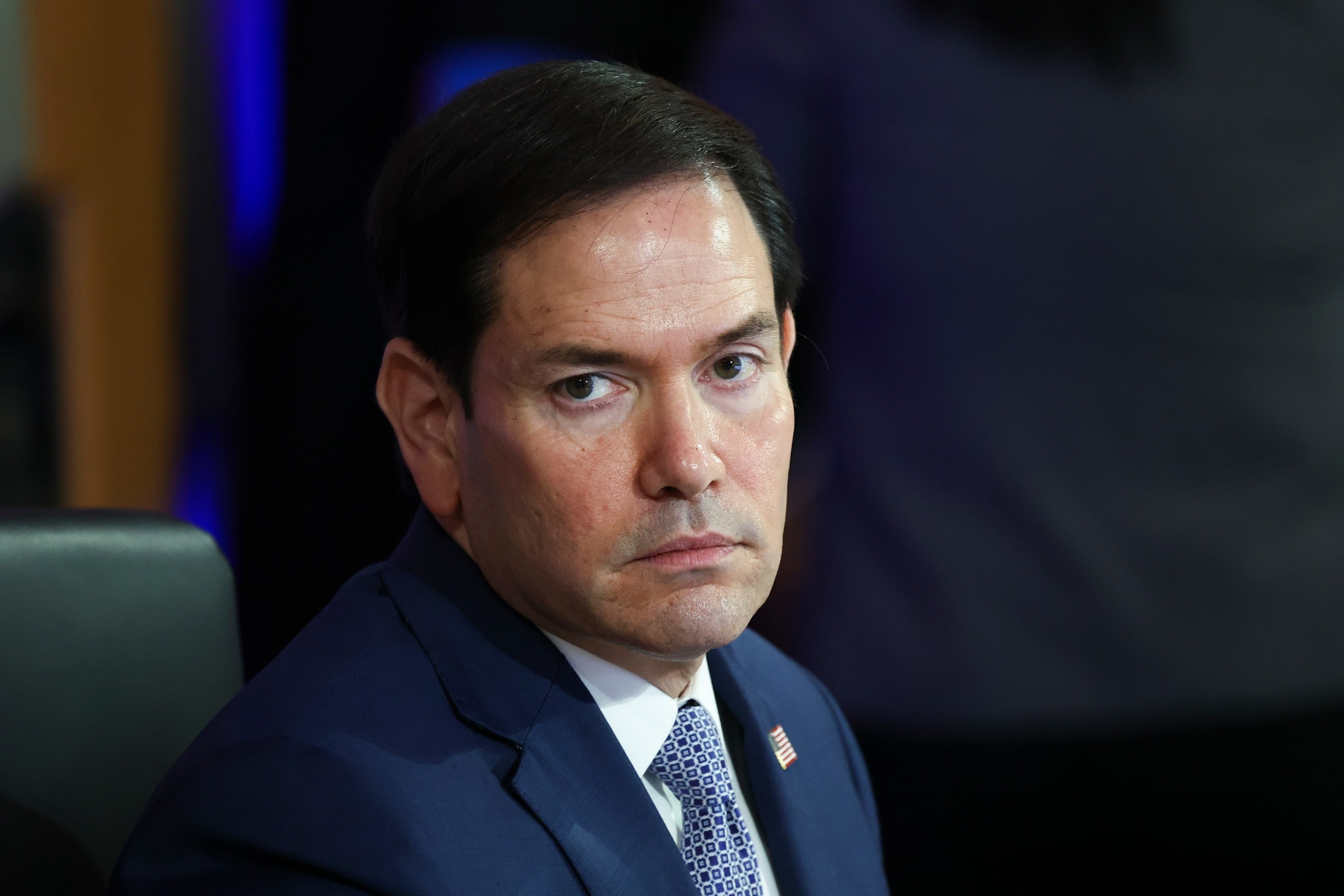
Secretary of State Marco Rubio attends the ASEAN Post Ministerial Conference with the United States during the ASEAN Foreign Ministers' Meeting, July 22, 2026 in Pasay, Metro Manila, Philippines.
Eloisa Lopez/Pool via Getty Images
Members of Congress have said that any nuclear deal with Saudi Arabia should meet a so-called "gold standard" by which Riyadh makes a commitment to forgo enrichment or reprocessing of fissile materials. Republicans, including Rubio when he was in the Senate, have made legislative efforts to attach strings to any such deal.
Sen. Jim Risch of Idaho, the chairman of the Senate Foreign Relations Committee, said in November that the gold standard "has to be" included in any finalized deal.
In a statement to ABC News Thursday, Risch said he "look[s] forward to seeing the details of the agreement and working with the Administration to review it."
"I have talked to Crown Prince Mohammed bin Salman about this on a number of occasions and both of us have been in agreement that an appropriate nuclear agreement would be in the best interest of both of our countries," he said.
Olli Heinonen, a former deputy director-general for safeguards at the IAEA, said other countries, including South Korea, would likely follow Saudi Arabia in pursuing uranium enrichment and seeking "nuclear latencies."
"The original [Nonproliferation Treaty's] nuclear disarmament takes a break," Heinonen said, referring to the global pact barring the proliferation of nuclear weapons. "These are realities."







 English (US) ·