
 1 hour ago
2
1 hour ago
2
Chucky pig. Slater. Monkey pea. Roly-poly. Boat-builder. Butchy boy. Cheeselog. Hobbling Andrew. Wood pig. If there were a prize for the range and joyfulness of a creature’s English-language names, the humble woodlouse would undoubtedly triumph over its million-plus invertebrate rivals.
Over centuries of easy cohabitation with humans, it has acquired more than 300 regional names in Britain alone, and many more in other languages (such as Gwrach y Coed, “witch of the wood”, in Welsh).
There are lovely words for woodlouse actions too: an animal rolling its body into a neat ball is known as conglobation, or volvation in zoology.
Their nicknames reflect our fondness for this most accessible of isopoda, an order of crustaceans, which is found in houses and gardens across Europe and the US.
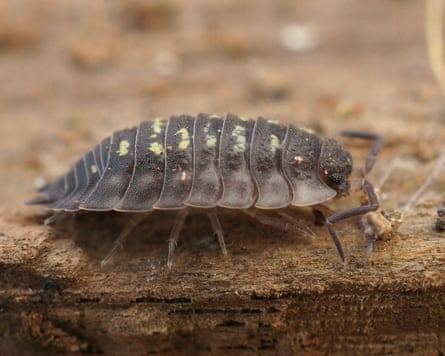
The common rough woodlouse, Porcellio scaber, is more widespread and found in South America and Australia too but it does not curl up in a ball. Hopefully, woodlouse voters in all continents can set aside their love for their local representative and consider the common woodlouse to stand for the entire 5,000-species-strong suborder.
The woodlouse was a trendsetter, its ancient ancestors moving on to land about 500m years ago, long before most animals. The woodlouse hasn’t needed to make many design refinements over the years because it found such a useful niche from the start. As a detritivore, it feeds on rotting plant matter and breaks down wood.
Sally Roe, one of many Guardian readers to nominate the woodlouse, has a good story. When she installed biodegradable bamboo kitchen countertops, she used an offcut in the garden to weigh down the cardboard suppressing weeds in her pumpkin patch. After a (successful) harvest, she moved the solid slab of bamboo and found a large colony of woodlice underneath. “The formerly very solid, very heavy slab of bamboo worktop was now a paper-light wood honeycomb,” she says. “Woodlice demonstrated to me extremely clearly that something being ‘biodegradable’ relies heavily on invertebrates.”
As well as tidying up our world, another of the woodlouse’s superpowers is its ability to withstand toxic pollution and even store heavy metals within special compartments in its body. Studies have shown it can help stabilise heavy metals in compost.
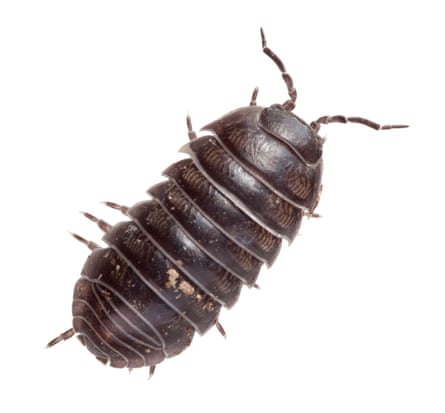
Many readers have expressed their love for what one calls “detrivore royalty”. Another wants to get a woodlouse tattoo (great idea!). Chris Pickard is consoled by their longevity. “They will undoubtedly be here long after humans have followed dinosaurs and dodos into the extinct category,” he says.
after newsletter promotion
And if you aren’t smiling at all their great names, you can invent your own. Peter Gregory calls them the “bumbling mumbling ombudsmen”.
So if you’re looking to celebrate an invertebrate that’s just brilliant company, vote woodlouse!
-
It’s invertebrate of the year again! From August 3-12, every day we’ll be profiling one of the thousands of amazing invertebrates that our readers have nominated, and then, when you’ve got to hear about all of them, we’ll open the voting so you can choose your favourites. Don’t hesitate to get in touch with thoughts and ideas: email us at environment.desk@theguardian.com with Invertebrate in the subject line.








 English (US) ·