 (2).jpg)
 13 hours ago
3
13 hours ago
3
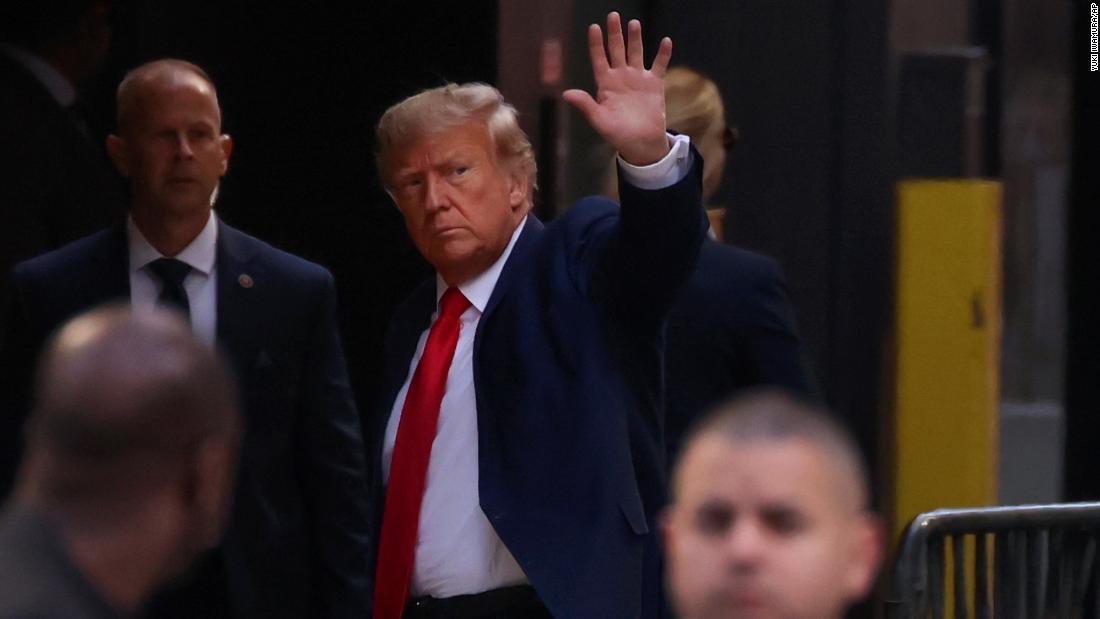
Todd Blanche is the most conflicted nominee for attorney general the US Congress has yet to encounter. As the former private attorney for Donald Trump, Blanche has been an unflappable ally for the president since 2023, when he left his private firm, Cadwalader, Wickersham & Taft, to represent Trump in the hush-money prosecution brought against him by the Manhattan district attorney, Alvin Bragg. He went on to represent Trump in two other criminal prosecutions – the Mar-a-Lago classified documents prosecution, and the January 6 prosecution, both brought against Trump by the special counsel Jack Smith.
As both deputy attorney general and as acting head of the justice department since April, when attorney general Pam Bondi was fired by Donald Trump, Blanche has unabashedly continued his advocacy work for his former client through other means. He has signed off on a settlement between the IRS and Donald Trump regarding the latter’s taxes, that would ban the IRS from pursuing litigation against Trump, his family or his businesses forever. That settlement has now been ruled by a federal judge to be self-dealing; she referred the case to the Florida Bar Association. The New York Bar has issued a letter saying that Blanche is unfit for office.
Until very recently, Blanche was actively pursuing the idea of an “anti-weaponization” fund, which was to be used to compensate individuals who were supposedly unfairly investigated or prosecuted by the federal government, who could have included prior defendants from the 6 January 2021 insurrection or potentially even Donald Trump himself. According to Bondi, Blanche oversaw the redactions of the Epstein material, which (supposedly inadvertently) revealed the names of the victims that the department had committed to keeping secret and managed to carefully redact information relating to Donald Trump and other rich and powerful men accused of abusing the young women Epstein trafficked. He has also been a staunch defender of Trump’s ballroom and of his cryptocurrency empire, shutting down the justice department unit assigned to investigate fraud in the crypto market. Blanche has also been one of the key proponents of vindictive investigations and prosecutions, ranging from the prosecution of Kilmar Ábrego Garcia to the investigation of the former CIA director John Brennan to the prosecution of former FBI director James Comey. The list of problematic and biased actions of the justice department under Blanche’s control goes on and on, despite his relatively short tenure. Others have documented them all ably in a grievance complaint to the department.
But even amid this litany of problematic conduct by Blanche, his many conflicts of interest from his role as private attorney for the president stand out as particularly consequential for the future of the department and for the rule of law. There should be a strong presumption that any private attorney for the president must be disqualified for cause from serving as the country’s chief law-enforcement officer. More disturbing still, Trump clearly chose Blanche for the job of deputy attorney general, and now attorney general, because of his conflicts of interest, not in spite of them. Trump appears to have only one criterion for members of his cabinet: they must be willing to engage in rank partisan behavior to benefit Donald Trump. Any hesitation or independence of thought will cost them the nomination.
One need look no further than senator Adam Schiff’s exchange with Blanche during the latter’s testimony in a confirmation hearing for his role as deputy attorney general last year. Drilling down on Blanche’s conflicts of interest as the president’s attorney, Schiff pointed out that the “weaponization” working group that later spawned the ill-fated weaponization fund was intended to be overseen by the person in Blanche’s future role as deputy attorney general. Blanche accepted that his oversight of the working group could constitute a conflict of interest, but he refused to accept that it would be “blatant”. Blanche even rejected the abstract statement that he should recuse himself from involvement in any matter that implicated the president’s interests if he, Blanche, had served as the president’s attorney on that same matter. At no time did Blanche commit to recusal on matters in which he would be conflicted, though he did say he would follow the advice of “career ethics attorneys” at justice department. As Schiff suggested, it might not be difficult for Blanche to secure the sign off of a DOJ career attorney (whom Blanche oversees) on an opinion stating that he does not need to recuse himself.
The constitutionally mandated process of securing the Senate’s advice and consent on nominations for high office should at the very least filter out nominees who lack even the potential for impartiality. This is particularly critical in the case of the attorney general, which has the potential to impact US democracy more profoundly than for any other member of a president’s cabinet. The great irony of a weaponized justice department is that it would use the vehicle of law itself as a way of subverting the law. Trump has long seen the department as useful precisely for this reason, and it looks as though he will finally have found the man to capitalize on the full potential of a corrupt justice department with Todd Blanche.
Prior misuse of the Department of Justice bears witness to the power of weaponizing the law. Former attorney general John Ashcroft, in his zeal to lend the department’s blessing to the enhanced interrogation program, ignored obvious flaws in the reasoning of the lawyers in the Office of Legal Counsel until their memos were later withdrawn. Ashcroft, however, remained an enthusiastic supporter of torture in investigations. As a comprehensive report authored by the Center for Ethics and the Rule of Law (CERL) produced in conjunction with Citizens for Responsibility and Ethics in Washington (Crew) detailed, attorney general Bill Barr ran the justice department as though it was a private law firm representing Donald Trump, among other things engaging in exercises of propaganda, such as Barr’s highly misleading rollout of the Mueller Report, to curry favor with Trump. But these two ideologically driven attorney generals, problematic as they were, did not have Todd Blanche’s conflicts of interest. Indeed, Barr eventually showed some independence, when he broke with Donald Trump over claims of fraud in the 2020 presidential election. Barr’s refusal to use the justice department to support Trump’s election challenge ultimately resulted in his resignation as attorney general.
Personal conflicts of interest are not equivalent to policy differences. Under most circumstances, and depending on their extent, they should be automatically disqualifying, particularly where the candidate himself refuses to grapple with them honestly. No member of the judiciary committee should be prepared to vote for Blanche without full satisfaction that Blanche would recuse himself in any matter implicating the president’s personal interests. But Donald Trump has effectively turned his own personal interests into every department’s main policy focus, and Blanche will not have the option to recuse without suffering the president’s ire at best, or removal from office at worst. Witness the removal of Jeff Sessions after his recusal from the Russia investigation. Moreover, if Blanche were to recuse himself from all matters where he would likely have a conflict of interest, he would be dysfunctional as attorney general. For multiple reasons, then, Blanche cannot supply the Senate with the reassurance it needs to move forward with his nomination.
Very few nominees to the office of attorney general have failed to secure confirmation over the years. Zoe Baird was forced to abandon the nomination by a bipartisan group of objectors over hiring an undocumented nanny. Joe Biden, who was chairing the Senate judiciary committee, delivered the devastating news to then president Bill Clinton – a clear instance of Senate Democrats being willing to take on their own party’s president over a matter of fundamental legal compliance. The same happened with Matt Gaetz, who was forced to give up his bid for attorney general as a bipartisan House ethics committee prepared to issue a report implicating Gaetz in sexual misconduct and illicit drug use. When nominees are forced to resign upon senatorial scrutiny, the system is working as intended.
The Senate must do its job with regard to Blanche. Unless the hearings this week paint a very different picture than Blanche’s last confirmation hearing, the Senate must strike a blow for the rule of law and reject him for cause.
-
Claire Finkelstein is the Algernon Biddle professor of law and professor of philosophy at the University of Pennsylvania and the faculty director of its Center for Ethics and the Rule of Law



 English (US) ·