
 3 hours ago
2
3 hours ago
2
This July, competitors are running scared – like Ithacans fleeing the cyclops Polyphemus – from The Odyssey, Christopher Nolan’s humongous staging of Homer’s epic poem. The only significant alternatives you’ll find at the cinema in the week of its release are a handful of Aardman rereleases and an astoundingly poorly reviewed adaptation of Animal Farm. The tumbleweeds roll on into next week too, where the star attraction is a cheapo horror film capitalising on Pinocchio’s public-domain status. Only by the 31 July does a blockbuster tentatively poke its head above the parapet – we commend you for your bravery, Spider-Man: Brand New Day.
No other film-maker is able to make studios retreat from the battlefield like Nolan, such is his clout. Sure, other directors might be able to attract sizeable numbers of moviegoers by dint of their name on the poster – Paul Thomas Anderson, Tarantino, Scorsese – but none of them are operating on the same “event cinema” scale, selling out cinemas for months on end. Modern-day Spielberg, with a fair wind behind him, might come close, but that depends completely on the project: flashy sci-fi movie that harks back to his golden era of ET and Close Encounters – perhaps; semi-autobiographical paean to the wonders of moviemaking – not so much. Nolan doesn’t tend to experience that variability: everything he stamps his name on will reliably hit.
Take his latest. Would an adaptation of a thousands-year-old oral poem starring Matt Damon, Anne Hathaway and Tom Holland be a success in normal circumstances, and with any other director? Perhaps – though it’s just as easy to imagine it on some film-blogs “biggest turkeys of all time” listicle, given the state of the swords and sandals epic, one of those once popular genres, like the western or the Hollywood comedy, now thought to be on the verge of extinction. But with Nolan’s stewardship, The Odyssey won’t just be a success, it will most likely be the biggest film of the year. After all, his last film, Oppenheimer, would have been, were it not for the plastinated charms of Barbie – and Oppenheimer, let’s remember, was a stately biopic of the father of the atomic bomb that only featured one measly explosion amid three hours of blackboard-scratching.
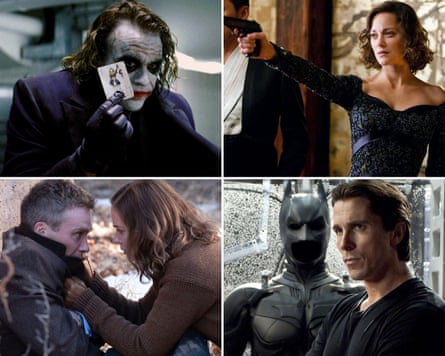
His unique ability to drive bums towards seats, irrespective of a film’s genre or subject matter, makes Nolan something of a unicorn (other, more Greek mythological beasts are also available); the sole remaining megastar in an age where the auteur has lost its aura. The consensus view that, in this franchise-heavy era, A-list actors can no longer launch a blockbuster on their own, surely applies doubly so to directors. Today, the best budding film-makers can hope for is that a studio spots their promising indie debut and signs them up for the latest instalment of their never-ending superhero movie expanding universe. There, said film-maker will lend a hint of credibility to the enterprise, before seeing their singular vision bashed into shapeless conformity in post-production – and, if then they’re lucky, get to experience the same act of debasement again with the sequel.
Nolan is an interesting point of contrast here, given that he reached “megastar director” status through a trilogy of Batman films. Helpfully though, that was at the mid-00s point where the superhero movie hadn’t yet swallowed the rest of cinema, and the director was able to bend the genre to his will rather than the other way round: The Dark Knight is assuredly a Nolan film first, and a Batman film second.
It’s not the only area where he has cleverly capitalised on favourable winds. As Imax has proliferated, and screens have grown ever bigger, so have the director’s films grown in kind. Nolan has, better than any other film-maker, adapted to cinemagoing’s dispiriting shift from everyday activity to occasional treat. If you can only really afford to catch a handful of films a year, you are likely to gravitate to the ones that feel like an all-caps EVENT. It’s telling that Nolan has avoided any sort of “one for them, one for me” approach: even his passion projects (Dunkirk, say, or Inception, the script of which he worked on for a decade) tend to be gigantic in scope, and sold as such.
Critics of Nolan would point to this emphasis on spectacle as a weakness, leading the director to neglect such piffling concerns as emotional connection or characterisation, particularly when it comes to women. I’m not sure The Odyssey will quiet those particular criticisms, but there are notable areas of evolution in his film-making: a slightly shocking lurch into body horror at one point; and more generally intriguing, an interest in the occult and the unknowable for this most mathematical of film-makers. Nolan, for his faults, is never making these blockbusters as a cynical act: he does seem to always be wanting to push himself artistically – just on an unambiguously mass-market scale.
That commitment to gathering as many people in front of a giant screen as possible is worth celebrating, particularly given that the alternative seems to be a ceaseless churn of streaming-first films that can be half-watched at home. Long may Nolan keep doing his thing, making competitors cower in the corner of the cyclops’ cave.
after newsletter promotion
To read the complete version of this newsletter please subscribe to receive The Guide in your inbox every Friday







 English (US) ·