
 1 hour ago
3
1 hour ago
3
David Nwamini arrived in Lagos for the first time in 2016. He had come from a village in Ebonyi, a state in southeastern Nigeria. He was 15 years old, the eldest of nine siblings and his parents were farmers. When he was a boy, his father became sick and David started working to assist his family, helping to cut trees and clear land. A few years later, he decided to seek his fortune in Lagos.
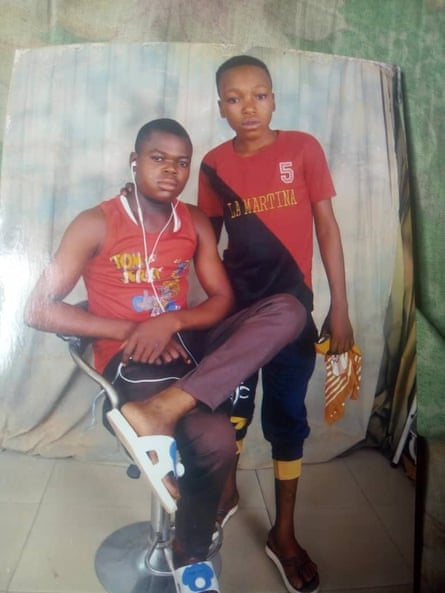
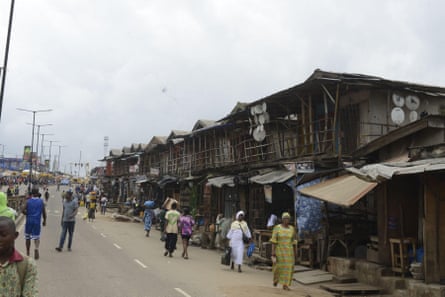
In Nigeria’s commercial capital, David spent his days in the open-air Ikotun Market, where thousands of people shop every day for everything from tomatoes and fabric to suitcases and electronics. He sold cellphone accessories out of a wheelbarrow under a wide umbrella, making less than £10 a day. After living with a relative, he moved into a room with two friends, Chukwudi and Friday, who also worked in the market. David had grown up in the same village as Chukwudi. A photo from their early childhood shows the boys together, David in a red sportswear shirt.
David was short and slight, with an unassuming face and sleepy eyes. He was playful and liked to joke around, Chukwudi recalled, “not a troublemaker”. Friday was older and carried himself like he was destined for better things. “Friday was living big boy life,” Chukwudi told me. “He was balling out, flexing; he can go and eat anything he like.”
One day in 2021, Friday disappeared from the market. He wouldn’t be in touch again until later that year, when he called David and told him the good news: he had got a job in the UK. “Wow, God has done for you then?” David said. Friday asked if David was interested in working abroad. Friday sent his friends videos of himself dancing in London, living the good life. He had accomplished the dream: he had escaped the dim economic prospects offered by his home country and got out. (There is a Yoruba slang term for it: “japa”, or as one Lagosian put it to me, “It’s like running for your life.”) David was interested in doing the same.
Soon after, David received a call from a man named Obinna Obeta, who had got his number from Friday. Obeta said that he could help David get to the UK, where he would provide him with accommodation and work. But first, he said, David would need to go to Abuja, Nigeria’s capital, to undergo some medical tests. David wasn’t sure what to make of this, until he received the money for his trip to Abuja. “That is the day that I knew he was serious,” David later told a court in London. He assumed the medical tests were part of the process for getting a visa.
In February 2022, David said goodbye to Chukwudi at a bus station in Lagos and began his journey to Britain. He had never met Obeta in person. When later asked in court why he thought Obeta was helping him, he responded simply, “Because I think it’s from God.”
Obinna Obeta, the man who contacted David, was a Nigerian radiologist who had moved to London to seek treatment for kidney failure. Nigeria suffers from high rates of kidney disease, but few have health insurance or can afford dialysis and medications. “Kidney disease treatment in Nigeria: people are just moving from here to the morgue. It’s traumatising honestly,” Obeta would later say. It was not until 2025 that Nigeria introduced comprehensive standards and guidelines for organ transplants, and only 2,000 or so kidney transplants have taken place there. Many Nigerians who have undergone organ transplants have done so abroad.
Even in countries with advanced healthcare systems, the wait time for a kidney can be long: two to three years, on average, in the UK, and up to five years or more in the US. According to the World Health Organization, organ transplant tourism – where patients travel abroad to purchase organs – accounts for at least 5% to 10% of transplants worldwide. Organ trafficking is believed to take place in about 50 countries, and it is one of the most under-reported forms of human trafficking. The UK considers moving people across international borders for the purpose of harvesting their organs a form of slavery, treating human beings as commodities to be bought and sold.
In July 2021, seven months before David left for the UK, Obeta had undergone a successful kidney transplant at the Royal Free hospital in north London. It cost him £70,000. He used the services of a medical tourism company, run by a Nigerian doctor who was then an NHS consultant. The kidney donor was David’s friend Friday, whom Obeta had falsely claimed was his cousin. In his notes, Obeta’s surgeon described Friday as a “shy, good-looking, muscular man, with large dark eyes, sculptured features, and a bashful manner. He is dressed in a modern, casual style, with his headphones on, and moved with an easy grace.”
On the flight to London, David knew none of this. Accompanied by a man and woman he had not met before, he had only a few possessions: some clothes, lotion and soap. No shoes besides the ones on his feet. It was his first time on a plane, and he slept for much of the flight. After landing, the man took David to a house off the Old Kent Road in south London, where he met Obeta for the first time. David was told he would sleep in the living room.
As David would later testify, Obeta treated him like a “houseboy”. “Every day I wash plates, I wash toilet, I wash, I sweep,” he recalled. David did not have any money and was reliant on Obeta for his meals. Even his passport was taken. There seemed to be no escape.
Across London, in Willesden Green, Sonia Ekweremadu was getting sicker. Less than two months before David arrived in the UK, she had posted an end-of-year recap reel on her Instagram page. It showed Sonia, a light-skinned 24-year-old woman, dancing, going out with friends, and lying in a hospital bed with a pink teddy bear. Her family home was in Abuja but she lived in London, having attended various private schools in England. With several family properties in Nigeria, as well as in the US and UAE, she had the privileged upbringing that is typical of a Nigerian politician’s children.
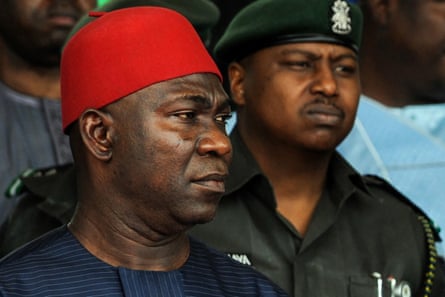
Sonia’s father was Ike Ekweremadu, one of the most prominent and powerful figures in Nigeria. Ike Ekweremadu had been elected to the Nigerian senate for a fifth consecutive term in 2019, and served as deputy president of the senate. His reputation extended beyond national borders, after his stint as speaker of the parliament of the Economic Community of West African States in the 2010s.
It was while Sonia was studying for her master’s degree in film at Newcastle University, in 2019, that she became sick. As she grew weaker, she had to drop out. A family friend eventually referred her to the Royal Free in Hampstead, which specialises in treating kidney disease. Sonia was diagnosed with FSGS Nephrotic Syndrome, a rare disease where kidney scarring leaks protein into the urine and causes bodily swelling. In August 2021, Sonia met with Peter Dupont, a consultant nephrologist at the Royal Free, who noted that she would require dialysis or a renal transplant. She received dialysis in a private patients’ unit on the top floor.
In September 2021, the court later heard, Sonia’s uncle, Isaac “Diwe” Ekweremadu, who is a doctor, called an old medical school classmate to talk about the transplant that he had at the Royal Free earlier that year. Diwe wanted to know whether his niece might be able to have a similar operation. His former classmate was Obinna Obeta.
At the time, Obeta was in desperate need of money. As a non-UK resident, he still owed £27,000 to the Royal Free as part of the £70,000 he was paying for his kidney transplant. He also had to spend £1,600 every month on immunosuppressants, so his body wouldn’t reject the kidney, and other medications and tests. “It just kept increasing. Just kept increasing,” he later said of his debt. For an initial sum of just under £2,000, Obeta agreed to help find a kidney donor for Sonia. He referred the Ekweremadus to the medical concierge service he had used for his own transplant. Soon after, Obeta got in touch with the young man who had provided him with his kidney, Friday, to ask for help finding a donor. Through him, he found David.
By November 2021, Ike Ekweremadu had a solution for his daughter. He forwarded a message to his wife: Diwe had found a donor who “matched very well”. The next step was to get the donor a passport and then a visa to the UK. David had no idea that the following statement was written on his visa application:
“I wish to state on conclusion of this application that I would be donating an organ to my closest cousin (Sonia Chinonso Ekweremadu) in appreciation for her sacrifices towards me, my family, and our community. I’m willing to put my life on the line for her to live and continue her good service to humanity. Finally, I wish to state that I’ll be travelling in company with my uncle, Obinna. He has been a father‑figure since I lost my biological father.”
None of this was true: Sonia was not a relative of David’s, nor was Obinna Obeta. He had never met them. His biological father was still alive. He had never discussed the prospect of organ donation with anyone.
David arrived in London in February 2022. Before his arrival, Sonia’s doctor at the Royal Free had written a letter to the Nigerian doctor who ran the concierge service, stating that she was not responding well to treatments and agreeing that a transplant would be the “best way forward for her”. The family had informed the Royal Free that they had a candidate, telling them that David was 19 and a distant cousin of Sonia’s. The doctor added in his letter that this prospective donor was younger than he would consider ideal and, because he was not a close relative, there could be difficulties gaining approval from the hospital and the UK Human Tissue Authority.
In the UK, kidney transplants are highly regulated. If the donor is alive, they have to go through extensive physical and psychological evaluations to make sure they are medically suitable and willing to donate. Once the surgical team approves the donation, the Human Tissue Authority must interview both the donor and the recipient to determine whether the donor has given consent and to ensure that no payment or coercion is involved.
According to the court transcript, Sonia’s uncle, Diwe, told her parents that they should now say that David was a first cousin of Sonia, not a distant one. He also later told them that there was a medical secretary at the hospital who would act as David’s interpreter. For a fee of £1,500, she had agreed to coach David on what to say during the interview he’d need to do for his kidney donation to be approved. She recommended that David be at the hospital during Sonia’s dialysis treatments to show his firm commitment to his cousin’s health.
The week of David’s arrival in London, Obeta took him to a west African restaurant on the Old Kent Road to have lunch with a young woman and an older woman. David had no idea who they were, and testified that the women didn’t ask him any questions about himself. They seemed afraid of something, he said. At the end of the lunch, the group took a photo. The two women were Sonia and her mother, Beatrice Ekweremadu.
Later that week, Obeta took David to the Royal Free, where he saw Sonia and Beatrice outside. Before Obeta began talking with them, he told David to stand away so he could not hear. “Obinna would just tell me where to stay and he would go with them and they would start discussing. Like they was controlling me,” David testified. He was confused to learn that he would be meeting with a doctor. “They said if the doctor ask me the school that I go, I should tell the doctor that I go to higher institution,” David told the court. “If the doctor ask me who is Sonia, I should say that Sonia is my cousin. They give me many things to answer the doctor. I should tell the doctor that they not pay me.”
On 24 February 2022, David went in for a meeting with Peter Dupont, the consultant nephrologist at the Royal Free, while Obeta waited outside. (The Royal Free, on behalf of its staff, declined to comment for this article.) “He told me that I want to do a kidney transplant,” David later recalled. “I was shocked because that is the first day that I hear about this kidney transplant.” Dupont asked him about his relationship to Sonia and what had motivated him to be a donor; about whether he was working or studying; and about what his parents did for a living.
David gave the answers he had been coached to provide. In court, Dupont recalled that David had been subdued: “We spoke for perhaps 15 or 20 minutes. His answers were very brief: single sentences, single words. He didn’t really appear to have any understanding of what it was that he was signing up for.” Dupont explained that there were dangers associated with the procedure, such as excess bleeding, infections and blood clots, and “a small risk of death,” as he wrote in his notes. Even if the operation went well, David would have an increased risk of chronic kidney disease and end‑stage renal disease. He would require regular follow-ups for the rest of his life to monitor his kidney function, blood pressure and urine protein levels.
Noticing David’s uneasiness, Dupont asked if he was scared to tell the Ekweremadus that he did not want to go ahead. David said he did not want to donate his kidney. It was only when Dupont made clear that the operation would not happen that David finally made eye contact, the doctor testified. “He was nervous that I would say or imply that the decision not to proceed was his fault. I assured him that confidentiality was paramount and the intended recipient would be told he was unsuitable.” He recalled David saying about Obeta: “He had not told me anything about this. I would never have agreed to any of this. My body was not for sale.”
Afterward, David told Obeta that he answered what questions he could, but there were some he could not. Obeta was angry. “He say that if I don’t do this – he used Igbo language to say this – if I don’t do this … I will find it difficult,” David testified. (Obeta insisted to the court that he had discussed the kidney transplant with David before the meeting.) Obeta also told David that he had 1.2m naira, or about £2,000 then, for him if he went through with the operation.
At the end of March, the decision was taken out of their hands. The Royal Free formally ruled out the possibility of allowing David’s transplant operation to go ahead.
David was relieved, but he was still living in limbo. He was not allowed to leave the house, and spent much of his time with Obeta’s kids when he was not doing chores. A few weeks after the Royal Free declined to proceed with the operation, two people came to Obeta’s house to examine David. They asked him to remove his clothes and applied pressure to his stomach. They still wanted to do the transplant, David said, and Obeta told David he had booked him a flight back to Nigeria. David was unsure what they had planned for him. “That is when I start to become afraid because I don’t know what I am going to do. Because all the plans, everything they are doing is behind my back,” David testified.
As David later told Chukwudi, his childhood friend, he had been in a state of panic. “He was even crying, he don’t know what to do,” Chukwudi recalled. “Even me, when he was telling me everything, I was crying. I didn’t know what to do. Because if he comes back, he has nothing to do again. He has already sold his market [stock], he used the money to buy some clothes for his trip.”
In court, David and Obeta’s accounts of what happened next differed in a few small ways. But the likeliest story is that on 2 or 3 May 2022, a friend of Obeta’s took David to Heathrow airport for a flight back to Abuja. But once he arrived at the airport, David said he decided he could not go back to Nigeria, where he feared he would be coerced into donating his kidney. Despite carrying little more than a used Samsung phone, AirPods, chargers and £27.90 in cash, he fled. He ended up walking around for three days, sleeping outside. He then ran into a stranger on Kingston Road in Staines, who gave him food and let him take a shower in his flat.
On 5 May, David went to nearby Staines police station, where he told officers a story that was mostly fictional. He said he had been begging for money on the streets of Lagos before coming to London, and that he was an orphan with no family in Nigeria. He told officers that the man he had travelled with had promised him money, but that he couldn’t say what the money was for. He said he was only 15. (David would later testify that he was trying to give the impression of being a vulnerable youth with nowhere to live in Lagos, so he wouldn’t be deported.)
According to Chukwudi, who spoke to David not long after he went to the station, a Nigerian woman hosted David at her home when the police released him into protective care. On the call, David still sounded afraid about the attempted kidney transplant, but he said the Nigerian woman was taking him to church. He thought he might even get the chance to go to school.
With David now gone, the Ekweremadus needed a new plan. After consulting with friends and colleagues, they decided on a new transplant location: Turkey. While the Ekweremadus maintain that Sonia had no knowledge of the plan to illegally get a kidney donor, she responded to her father’s WhatsApp messages that had photos of new potential donors. To one photo of two young Black men, Sonia wrote: “OK, that’s fine. Thank you. Are they still more to test?”
Her father told her: “Yes, but by the end of the week, I will decide who to proceed with. We will get it right this time.”
Sonia wrote back: “I trust you, daddy, thank you ❤️”. Then she added: “The dark one looks better, the light one looks like he’ll run away 😂😂😂”.
In June 2022, on Father’s Day, Sonia wrote to her father on the family group chat:
“Happy Father’s Day, daddy, you mean the world to us … You are the best father in the world. I know lots of people say that about their fathers, but mine is really the best … I pray for long life and prosperity, to be able to see your grandchildren and great-grandchildren in Jesus’ name. Amen. I want to especially thank you for everything you’ve done and are doing regarding this transplant process. You and mummy have gone above and beyond for me, and it never goes unnoticed and unappreciated … I hope that one day I’ll be able to take care of you, and mummy, the way that you’ve taken care of us all these years (don’t worry, I haven’t forgotten your Range Rover gift).”
Ike replied: “I know you didn’t forget, sweetheart … I will spare nothing to ensure your good health and comfort. I have the support of mummy on this objective 100%. By the grace of God, you will be out of this challenge before the end of August. It’s a promise. Just be strong for all of us.”
Two days later, Ike and Beatrice Ekweremadu were arrested at Heathrow as they travelled back from Turkey. They were charged with conspiracy to commit human trafficking for the purpose of exploitation, specifically organ harvesting. The couple had at least £30,000 in cash on them. Sonia was arrested the same day at her home in London. Obeta was arrested the next month. Sonia’s uncle Diwe remained in Nigeria and was not extradited to the UK. (I was unable to reach Diwe for comment.)
It is extremely rare for a Nigerian politician of Ekweremadu’s status to face criminal charges. In the UK, the story was widely covered in the media, but in Nigeria, the case attracted a different level of interest, dominating the front pages of newspapers and sparking discussions on primetime TV news, as well as endless social media posts and WhatsApp messages across both Nigeria and the diaspora. One of David’s uncles, Linus, who had given him a place to stay when he first came to Lagos, discovered his nephew’s story on social media like everyone else. “If I had known, I wouldn’t have allowed him to go,” Linus told me.
On 6 February 2023, the trial of Obinna Obeta and Ike, Beatrice and Sonia Ekweremadu began at the Old Bailey in London. All pleaded not guilty. Ike claimed that he thought David was donating a kidney to his daughter out of kindness, and that he never agreed to pay him. He accused Obeta of scamming him out of money, and he argued that David had lied to the police so that he could get asylum in the UK. “D was never exploited, D accepted and agreed, volunteered to help my daughter with this kidney and we believed him,” Ike told the court. “But looking back now it was obvious that he was scamming everybody, he just wanted to come to England and take refuge.”
Ike downplayed David’s vulnerability. “Lagos is a place where you get wiser by the day for you to survive. So, even a young person in Lagos cannot be intimidated,” he said in court. “Because they are just streetwise.” When asked if he knew David was selling phone accessories out of a wheelbarrow, he responded: “I didn’t know in particular but that’s also a big business, he’d make millions with that.”
Ike did admit to fabricating the familial relationship to David. “That is what Dr Obeta advised us,” he said. “My daughter was sick, and somebody had told us what we would need to do, and we didn’t see any corruption in this; we didn’t corrupt anybody.” Both he and Beatrice kept saying during the trial that their lies to the Royal Free about David’s identity were “not who we are” – they were just desperate to save their daughter’s life. “She was born premature, so we struggled to save her life from day one,” the former senator said. He refused to admit any guilt. When asked if he was the victim in all this, Ekweremadu said: “Yes.”
The trial shed more light on Obeta, who had obtained a UK medical visa for his own transplant and then stayed to work in the country illegally, getting a job as a cleaner during the pandemic. “It was amazing … I’ve never seen this kind of, you know, surgery skill,” Obeta told the court of his transplant experience. “I want to use this opportunity to thank the people of the UK for saving my life.” But he had seemingly made no arrangements for his donor, Friday, who would have to find his own way as an undocumented immigrant in London, and somehow pay for the lifelong testing and monitoring he would need after donating a vital organ. (No one that I spoke to in Lagos had heard from Friday in years.)
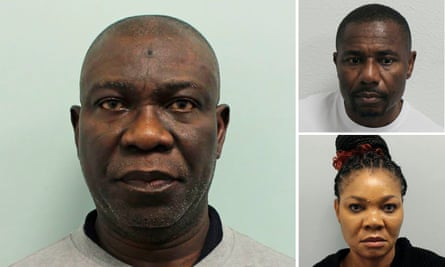
On 23 March 2023, at the end of the six-week trial, Ike and Beatrice Ekweremadu were found guilty of organ trafficking. Ike was later sentenced to nine years and eight months; Beatrice to four and a half years. Sonia, who had also been charged with conspiracy to arrange organ harvesting, was acquitted. Obeta was convicted of organ trafficking and sentenced to 10 years. The Ekweremadu case was the first successful organ-trafficking conviction in the UK under the Modern Slavery Act.
After he testified in court via a video link in February 2023, David vanished. The police had placed him in protective custody, and none of his family or friends in Nigeria knew where he was. He had told the court: “I have no one here [in the UK], no family or friends. I’m having to start my life again. I am wary of new people that come into my life now. My plan now is to work and to get an education and to play football.”
In Lagos, in 2024, I met a childhood friend of David’s, Jeremiah Nwamkpuma. In a beige, shabby office upstairs from the stalls in Ikotun Market, we chatted over the noise of hawkers and shoppers. Nwamkpuma told me that he’d recently visited David’s dad in the family village. “[He] asked me about David. I’m telling him that I’m not hearing from him. He’s crying. Since David left, he’s not heard from him,” Nwamkpuma said. “Tension is high in the family.”
The family was confused and hurt that David had disappeared from their lives, even though they understood that he, too, was likely afraid. His parents were angry, Nwamkpuma said. They farmed cassava, plantain, yam and other crops, but had little money. When David was selling cellphones, he would send money back home to help them. “We’re happy he’s saved, but there’s no proper communication,” Jeremiah Mbah, who is the pastor of a church David occasionally attended, told me. “It’s as if he’s lost.”
For more than two years no one heard from David, but then last year, he called from the UK. He reached Chukwudi, who was surprised and relieved. “He wanted to hear from me, and know how his parents are doing. I explained to him that his daddy is very sick, and that they needed him present. But he said there was no way for him to come. He was feeling bad,” Chukwudi told me. In court, David had said that he was concerned about his safety if he returned home. Ekweremadu “has a lot of people that know him. In Nigeria, those people can do anything.” He asked Chukwudi to help with the cost of David’s father’s care. “He told me that he was going to school. He sounded very good,” Chukwudi said.
David’s father died last August. Nwamkpuma called him to let him know of the death. David cried at the news, Nwamkpuma recalled, but said that he still couldn’t come because of his studies; Nwamkpuma told him to stay.
Chukwudi, Nwamkpuma, and David’s family have tried to reach him since then, with no success.
After her parents were convicted, Sonia gave a short interview to the BBC. She looked poised, wearing understated gold jewellery, with her hair in braids. “It’s sad. It’s been really hard to really wrap my head around it,” she said. “I understand the conviction, personally I disagree with it. However, that’s from a very biased perspective as their daughter. I would obviously always, always back my parents. However, the law has taken its course, and we just have to now move forward as a family.” She admitted she was aware “to an extent” of her parents’ plan, but that she “didn’t really know anything leading up to it”. She added that she didn’t “feel anything” towards David, but wished him “all the best”.
She was now in a precarious medical situation. “Either I stay on dialysis for the rest of my life, or I get a transplant; these are my two options,” she said. She had visited her parents in jail, and said they seemed calm. “I feel guilty,” she said, her voice breaking. “Because I feel like all this has happened because of me.” (Sonia declined to comment for this article, but on her Instagram, she often posts stories with bible verses and prayers, as well as photos with friends.)
The Ekweremadu case is still the only successful conviction for organ trafficking under the Modern Slavery Act in the UK. There is a simple reason that such convictions are rare, particularly in Nigeria, says Frank Tietie, a human rights lawyer: “Those who are involved are usually very powerful people, and they’re able to influence our justice system.” While Ike Ekweremadu remains in prison, Beatrice was released in January, after serving the custodial portion of her sentence. Upon her return to Nigeria, local media reported that she was greeted with celebrations in her home town of Mpu.
Late last year, in a sign of Ike’s continued status in his home country, Nigeria’s foreign minister met with officials at the UK Ministry of Justice to request that he be returned to Nigeria to serve out the rest of his sentence there. The UK rejected the request. Nigeria has arrested and charged several other people with organ trafficking, but the trials have lagged. As Tietie said, “So it’s still going on, largely unreported, largely unchecked.”
The Long Read magazine summer edition
AI in the classroom, vending machines in the canteen, homeless people in the library, no one in the pub. Surprising stories from our strange new world in the new edition of the Long Read magazine. Buy your copy here.




 English (US) ·