Africa struggles to align forest governance as climate, biodiversity and land degradation policies collide
📍 Ghana • by Blitano • Jun 07, 2026
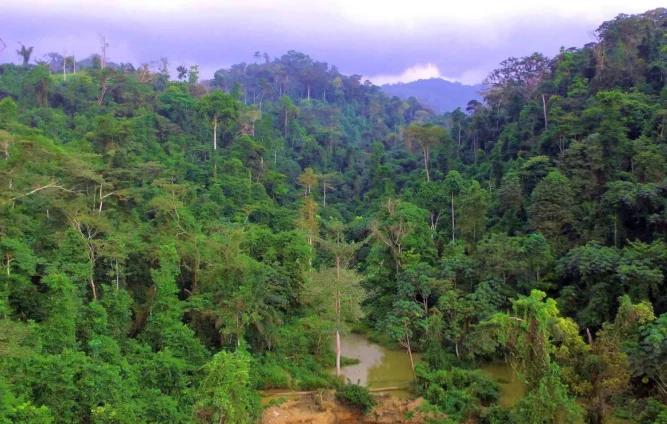
Across Africa’s major forest landscapes, governments are increasingly aligning national policies with global environmental agreements, but a new study warns that weak coordination, limited funding and institutional silos are undermining progress on the ground.
The synthesis, titled – “Evaluation of national governance instruments on desertification, biodiversity and climate change on forestry, and their coordination in forest biodiversity hotspots in Africa,” commissioned by the African Forest Forum (AFF) and supported by the Swedish International Development Cooperation Agency, examines governance systems in Ethiopia, Cameroon, Kenya and Madagascar. It focuses on how countries are integrating forestry into policies on biodiversity, climate change and desertification.
The study finds that all four countries have developed relatively strong policy frameworks linked to global agreements such as the UN climate and biodiversity conventions.
Kenya, for example, has laws and strategies linking forestry, climate change and biodiversity conservation, including forest restoration and land management plans.
Ethiopia has set ambitious climate targets, including plans to significantly cut greenhouse gas emissions by 2030. Cameroon and Madagascar also report comprehensive policy frameworks covering forest restoration, biodiversity protection and climate adaptation.
But despite this policy progress, the study says implementation remains uneven and fragmented.
A key challenge across all countries is institutional fragmentation. In Ethiopia, forest and agricultural institutions often operate separately, limiting coordination between key agencies. Fewer than 60% of stakeholders reported effective collaboration.
Kenya faces similar challenges, with national agencies, county governments and community groups often working in parallel rather than together.
In Cameroon, weak coordination between park authorities and local communities limits effective forest management. Madagascar faces overlapping responsibilities between ministries, NGOs and local institutions, creating duplication and confusion.
The study highlights major differences in how communities are involved in forest governance.
Ethiopia’s Participatory Forest Management model stands out, with strong local involvement linked to both forest recovery and household income in some areas.
Kenya also shows relatively strong community engagement in places such as Arabuko Sokoke Forest, although local groups are not always fully integrated into formal decision-making.
The synthesis, titled – “Evaluation of national governance instruments on desertification, biodiversity and climate change on forestry, and their coordination in forest biodiversity hotspots in Africa,” commissioned by the African Forest Forum (AFF) and supported by the Swedish International Development Cooperation Agency, examines governance systems in Ethiopia, Cameroon, Kenya and Madagascar. It focuses on how countries are integrating forestry into policies on biodiversity, climate change and desertification.
The study finds that all four countries have developed relatively strong policy frameworks linked to global agreements such as the UN climate and biodiversity conventions.
Kenya, for example, has laws and strategies linking forestry, climate change and biodiversity conservation, including forest restoration and land management plans.
Ethiopia has set ambitious climate targets, including plans to significantly cut greenhouse gas emissions by 2030. Cameroon and Madagascar also report comprehensive policy frameworks covering forest restoration, biodiversity protection and climate adaptation.
But despite this policy progress, the study says implementation remains uneven and fragmented.
A key challenge across all countries is institutional fragmentation. In Ethiopia, forest and agricultural institutions often operate separately, limiting coordination between key agencies. Fewer than 60% of stakeholders reported effective collaboration.
Kenya faces similar challenges, with national agencies, county governments and community groups often working in parallel rather than together.
In Cameroon, weak coordination between park authorities and local communities limits effective forest management. Madagascar faces overlapping responsibilities between ministries, NGOs and local institutions, creating duplication and confusion.
The study highlights major differences in how communities are involved in forest governance.
Ethiopia’s Participatory Forest Management model stands out, with strong local involvement linked to both forest recovery and household income in some areas.
Kenya also shows relatively strong community engagement in places such as Arabuko Sokoke Forest, although local groups are not always fully integrated into formal decision-making.
👁️ 2 Total Views