
 1 hour ago
2
1 hour ago
2
At the World Cup this summer locs, or what are commonly known as “dreadlocks”, have become as ubiquitous as free kicks. Defenders pin theirs back for clear sight-lines; forwards loosen and shape theirs for the cameras.
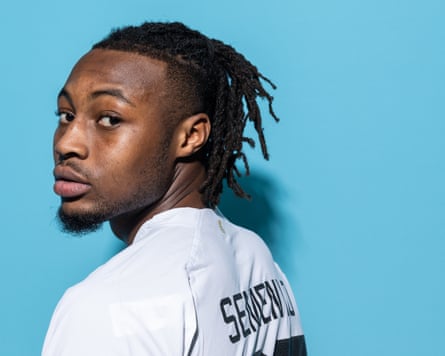
Antoine Semenyo of Ghana paired his with a sharp undercut. Spain’s Nico Williams bleaches his tips. Belgium winger Jeremy Doku has a mix of blond tinted tips, cornrowed. England’s Eberechi Eze has a variant styled into cornrows, while his former Crystal Palace teammate (and soon to be similarly gutted opponent in Saturday’s third-place “bronze” play-off) France’s Michael Olise opts for a slickly styled taper fade, a technique that emphasises the volume of the locs on top. Manu Koné, also of Les Bleus, has sported braided locs, while Switzerland’s attacking midfielder Johan Manzambi has gone for jumbo locs in combination with rope-like, protective Senegalese twists.
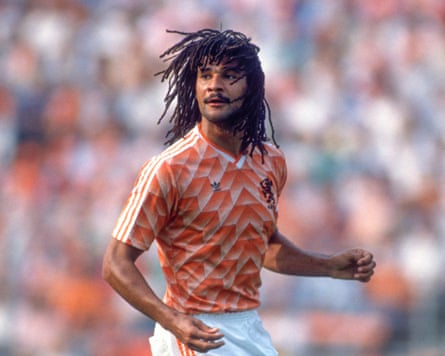
Locs have always been present in football, but what’s new is the range. In the past if footballers, such as Dutchman Ruud Gullit, who played for AC Milan and Chelsea in the 1990s, or Swedish striker Henrik Larsson, wore locs, they did so in the same style throughout their careers, for convenience and low-maintenance. But for the modern player, locs shift from tournament to tournament, sometimes match to match.
Fidelis Okafor has spent a decade as a barber and the last three years running his own shop, FidelFadez, in Nottingham. Until recently, locs were a specialist service he offered, rather than a core part of his regular work. Then Leicester City winger Abdul Fatawu Issahaku recommended him to the rest of the Ghanaian national team, and he was soon flown to Ghana’s official World Cup training camp in Boston, tasked with tending to the barnets of Antoine Semenyo, Jerome Opoku and Brandon Thomas-Asante. Amid their hectic tournament schedules, most appointments were for retwists, a routine maintenance method that involves twisting new hair growth at the roots into the existing, mature locs, creating a neat appearance that helps them hold through heat and sprinting.
Sheldon Edwards runs a similar operation on a larger scale. Three of his 13-strong team at HD Cutz in south London travelled with the United States squad, also taking on work with Swiss, Dutch and Algerian players. Cape Verde, in their first World Cup, brought braider Lorreta Rocha to their base in Connecticut.
Edwards traces the resurgence of locs back to its ethos-based roots in Jamaica, the country he was born in before moving to the UK at an early age. “Locs is deeply rooted in the Jamaica Rastafarian culture, where they have long represented faith, identity, and resilience,” he says. “For decades, they were misunderstood and judged. Seeing all the World Cup footballers wearing locs on the biggest stage shows how far perceptions have shifted,” Okafor adds. “It’s about culture and confidence and authenticity. “I don’t call it rebellion. They’re just saying, ‘yeah, I want this hairstyle’.”
Locs used to cost players trials. Ian Wright heard it from his peers directly: “They would tell me, ‘they didn’t let me go through the trial because I had locs,’” he said on Gary Neville’s Stick to Football podcast.
Psychologist Johanna Lukate – author of Dis(entangled), which looks into the deeply personal relationship between Black individuals and their hair – sees this same pattern in her research: players who read as unprofessional to employers or executives; parents who steered their kids away from locs out of fear of what a coach might assume.
The word itself was never neutral. Writers Ayana Byrd and Lori L. Tharps trace the term “dreadlocks” to a colonial framing in their 2014 book Hair Story: Untangling the Roots of Black Hair in America. Dropping to “locs” or removing the “a” in dread is part of unwinding that. A UK workplace study (pdf) found that where a fade reads as “appropriate” 80% of the time, the figure for locs and cornrows and Afros is closer to 65%.
after newsletter promotion
Celebrity hairstylist, Jayèma, who worked with England players including Marcus Rashford this summer, believes this new ubiquity has affected false stereotypes that previously surrounded locs: “Footballers have a platform that’s impossible to ignore.”
Today’s stars can reach elite level and become branded juggernauts with the hairstyle, with players such as Portugal’s Rafael Leão, who has what’s known as needle-worked locs, securing deals with the likes of New Era, Adidas and Dolce & Gabbana. Tunnel walks, pre-match looks and styles and choreographed post-match papped pictures are all part of the modern footballer’s parlance, and give opportunities for exposure: players can express their personal style, including their locs, in these highly visible moments off the pitch.
“When high-profile players wear locs confidently on the biggest stages, it normalises the hairstyle for millions of young fans,” says Jayèma. “Visibility matters, and the more people see successful athletes wearing locs, the less they’re viewed as unconventional or unprofessional.”
To read the complete version of this newsletter – complete with this week’s trending topics in The Measure – subscribe to receive Fashion Statement in your inbox every Thursday.





 English (US) ·