
 1 hour ago
1
1 hour ago
1
President Donald Trump, in a primetime address on Thursday, announced he has declassified a slew of documents he claims reveal vulnerabilities in America's elections systems, election fraud, and interference by China, and ordered the Department of Justice to prosecute those believed to be involved.
"America is back and doing really well, but we still have a major challenge that must be urgently addressed because no country can be great without fair and honest elections, you have to trust your country," Trump said. "Because if there can be no trust, there can be no greatness, and that's very simple: no trust, no greatness."
But throughout the 22-minute speech, the president did not provide specific evidence that the election outcome -- or any votes -- were altered in the 2020 election, despite his repeated claims that the election was "stolen" or "rigged."
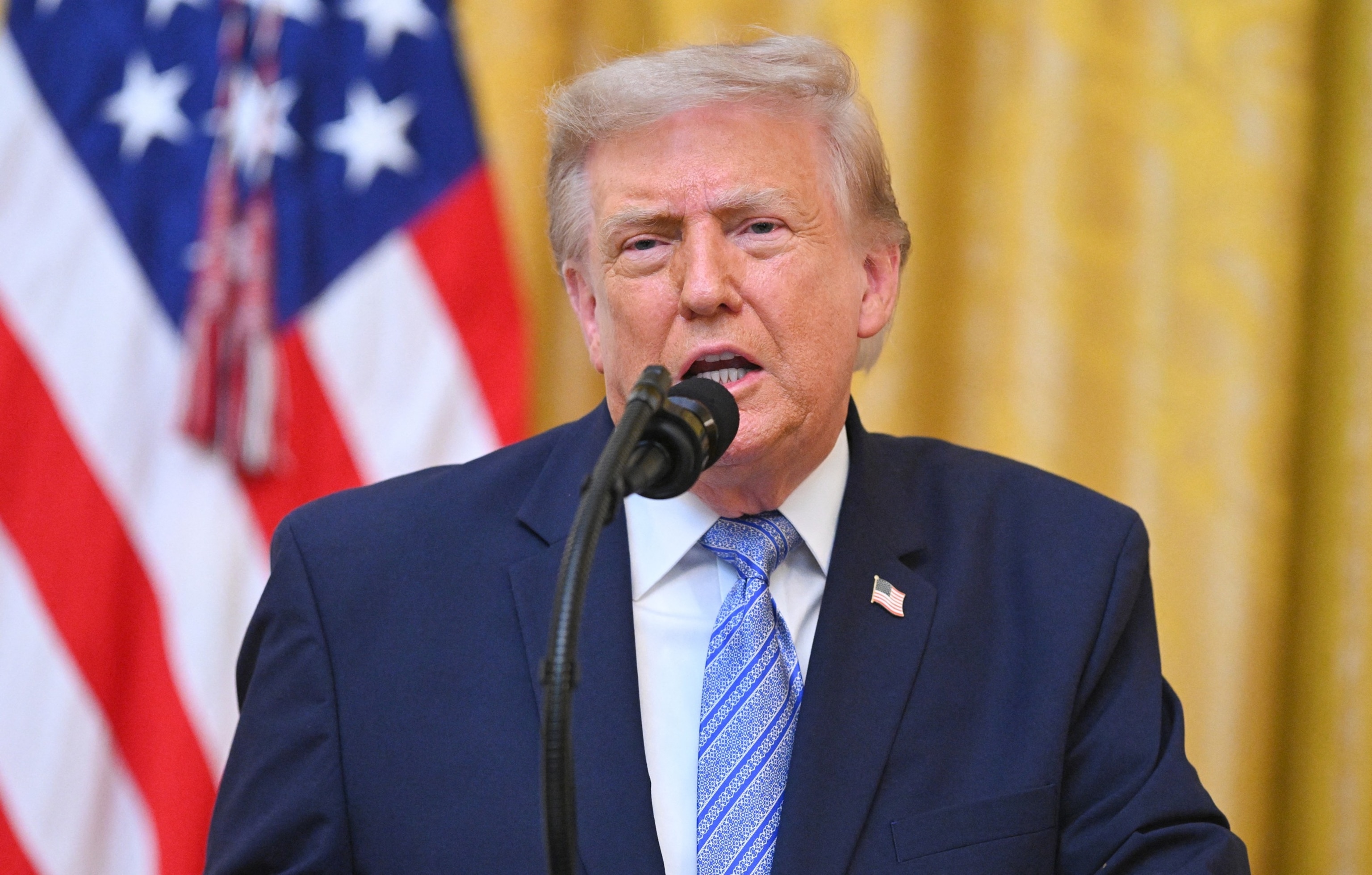
President Donald Trump addresses the nation from the East Room of the White House in Washington, July 16, 2026.
Saul Loeb/AFP via Getty Images
US elections
In the remarks, the president said that he would immediately declassify the release of "critical intelligence, revealing shocking vulnerabilities in our election infrastructure."
"This evidence shows that the election system we have dangerously exposes, and really exposes like levels never thought possible, to hacking, exploitation, and foreign interference. Just as disturbingly, this vital information has, for many years, been covered up and hidden from you, the American people," Trump said.
According to the president, the documents focus on what he said were a number of areas of concern, including claims that China "compromised" election data during the 2020 election, and attempts to downplay the extent of China's efforts.
Chinese exploitation of voter data claims
Trump argued that the intelligence community suppressed information about China allegedly accessing 220 million voter files and trying to turn American opinion against him in the run-up to the 2020 election.
"First, they show that over a period of years, starting during the 2020 election cycle, the People's Republic of China carried out what is believed to be the largest compromise of election data in history, resulting in China's illicit acquisition of 220 million U.S. voter files. That information includes names, addresses, phone numbers, political party preferences, and other sensitive data that would be needed to register to vote and engage in other nefarious activities," Trump said.
The president accused the so-called "deep state" of keeping information about election meddling from him.
"The second set of documents we are releasing reveals that members of the deep state, very, very famous group of people, in many cases, in our intelligence agency, work to actively suppress and downplay information about the extent of China's sinister election meddling," the president said.
Trump claimed that U.S. intelligence agencies learned that tens of millions of voters' data in 18 states had been "bought, stolen, or hacked" by China, and that the intelligence community deliberately kept this information from him while he was president.
"Those responsible for sounding the alarm instead kept the information secret and hidden. They did not disclose to me as president or to anyone else, and to the best of our knowledge, they did not inform Congress," Trump claimed.
The president insisted that the Chinese government wanted him to lose the 2020 election, convinced that he would be harder on them than his opponent Joe Biden would be.
Despite the alleged efforts by the Chinese government happening during Trump's first term, he claimed that the information about Chinese attempted election interference was kept out of his daily intelligence briefing.
Trump also called for investigations into those who he accuses of withholding information on alleged Chinese interference into the 2020 election.
Officials from both the Biden and Trump administrations said there was no intelligence indicating that voting machines or vote totals were changed. In March 2021, two months into the Biden administration, a declassified Intelligence Community Assessment (ICA) publicly acknowledged the belief among some intelligence officials that "China took at least some steps to undermine former President Trump's reelection chances." But the ICA said any such actions were "primarily through social media and official public statements and media," not through interference with "election processes."
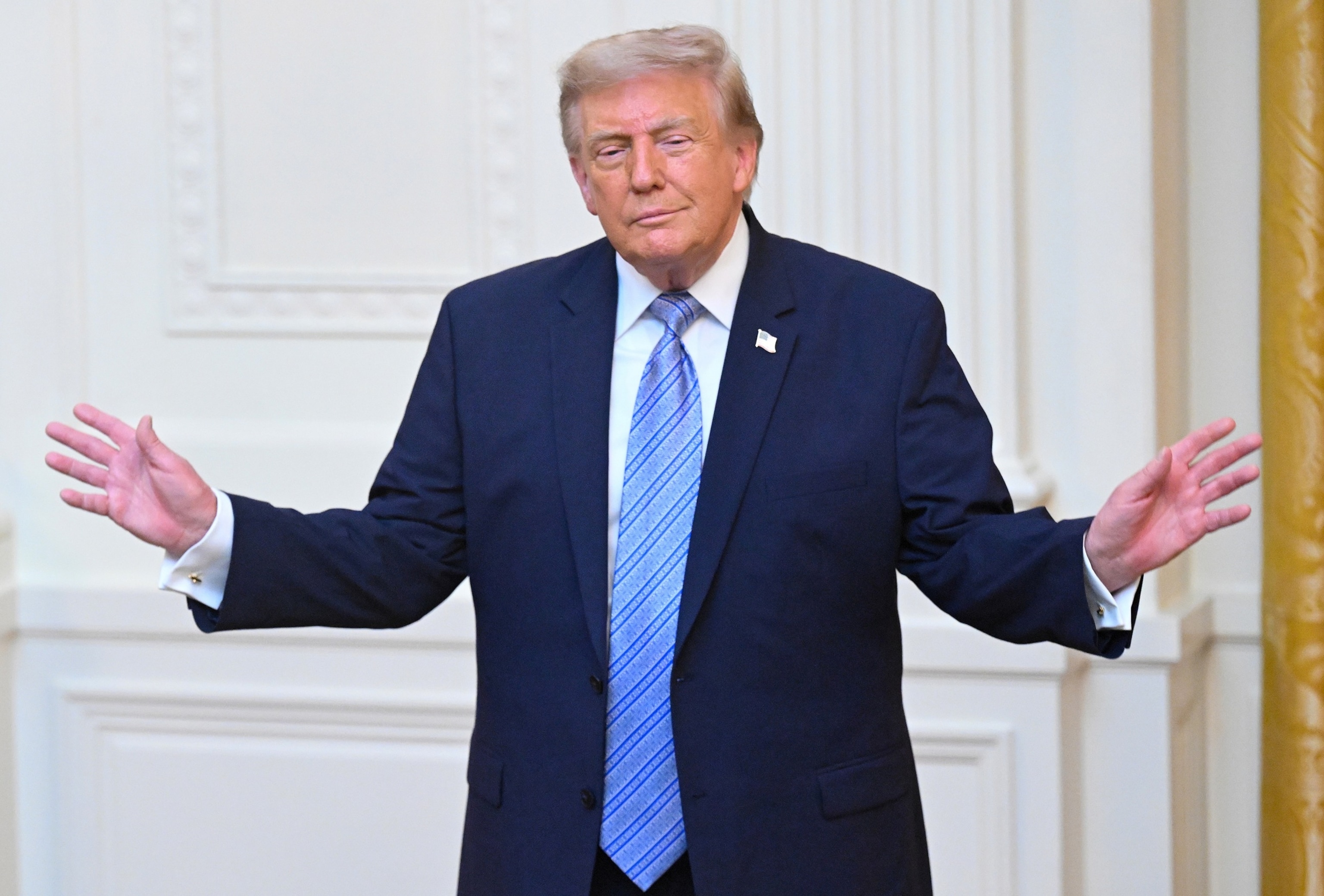
President Donald Trump gestures after addressing the nation from the East Room of the White House, July 16, 2026 in Washington.
Saul Loeb/Pool via Getty Images
Further, the ICA said that while China was "probably" trying "to gather information on US voters and public opinion; political parties, candidates and their staffs; and senior government officials," the more reliable intelligence indicated that such efforts were not actually intended to undermine Trump but instead to "predict electoral outcomes and to inform its efforts to influence US policy toward China under either election outcome."
Chinese Foreign Ministry Spokesperson Lin Jian responded Friday to the claims of Chinese election interference.
"The relevant allegations from the U.S. side are completely fabricated out of thin air, and this malicious smearing has long been proven to be utter nonsense," Jian said. "China has always adhered to the principle of non-interference in internal affairs; we have no interest in and have never interfered in the U.S. presidential election. On the contrary, who is it that routinely interferes in the internal affairs of other countries? Who has engaged in long-term, indiscriminate surveillance of governments, enterprises, and ordinary citizens worldwide, and has stolen the data of other countries' citizens on a massive scale? The international community sees this with absolute clarity."
"We urge the U.S. side to engage in self-reflection, stop its groundless smearing of China, refrain from using China as an issue in the election, and do more of what actually benefits China-U.S. relations," Jian continued.
Voting machine and vote-counting systems
Trump also claimed that Americans have been "blatantly lied to" about how secure U.S. voting infrastructure is, focusing on electronic voting machines and ballot counting systems.
"This is a cyberthreat aimed at the very heart of our democracy," he said.
Among the documents, Trump claimed, was CIA information on a specific plot by the Maduro regime in Venezuela "conspiring to digitally rig their own country's elections in 2020."
Trump suggested the same alleged tactics could be used in the U.S. But it's unclear where that information came from or how credible the CIA determined it was, or whether the alleged plot was successfully executed inside Venezuela.
Michigan 2020 voter registration investigation
In his speech, Trump alleged that former Justice Department officials slow-walked an investigation in Michigan that allegedly involved the submission of voter registration applications that apparently had forged signatures and other indications of fraudulent applications.
"Among the disclosures tonight are FBI files detailing evidence of alleged fraud by a large-scale voter registration operation in Michigan," he said. "In 2020, Michigan State Police raided a Democrat get-out-the-vote organization, corrupt group, in Muskegon, and we're so concerned by what they found. They were just so concerned they couldn't believe it, actually, that they contacted the FBI in Detroit."
"The documents state that some canvassers admitted to FBI agents that they signed voter registration forms in other people's names, submitted fraudulent registration for people who did not exist, and received gift cards tied to their number of applications that they produced," the president added. "In other words, it was pay, play and cheat."
Trump said he would ask FBI Director Kash Patel "to ensure that the matter is fully investigated and to work with the Department of Justice to prosecute those responsible for any crimes."
Local media at the time said that a state-level investigation was halted so the FBI could continue with a related investigation. It's unclear why no federal charges were ever brought, or if federal charges were even warranted. So far no concrete evidence has surfaced indicating malfeasance within the Justice Department in not filing charges.
At the time, state officials said that the fact that the fraudulent applications were detected shows that the system worked. "A thorough investigation was conducted by multiple agencies within the state and no successful fraud was perpetrated upon the state's election process or qualified voter file," one state official said at the time.
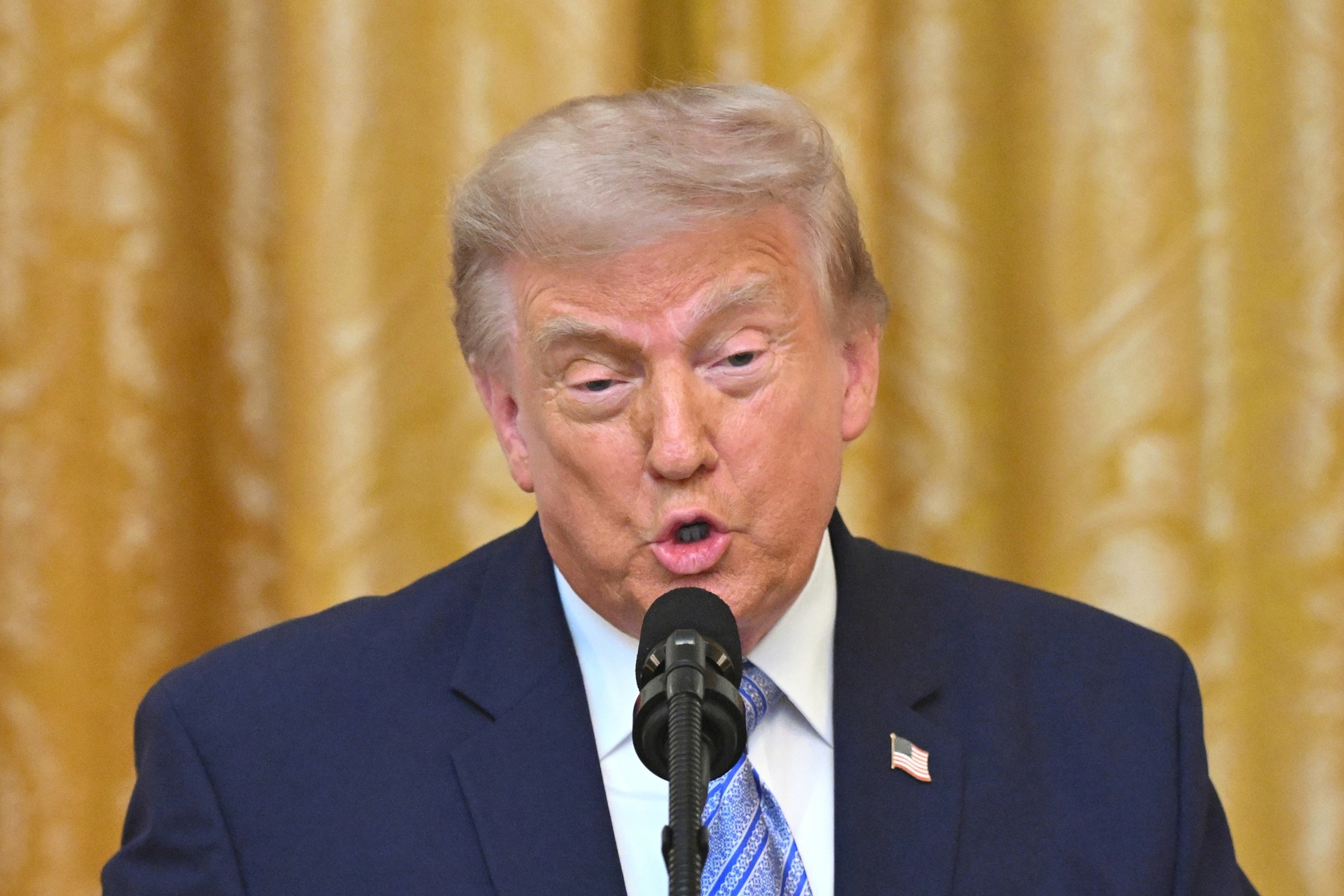
President Donald Trump addresses the nation from the East Room of the White House in Washington, July 16, 2026.
Saul Loeb/Pool via AP
Non-citizens on voter rolls
The president also said the documents released Thursday include a Department of Homeland Security report he called "stunning," alleging that "state voter rolls and public records ... identified approximately 278,000 non-citizens who are registered to vote in federal elections."
"Our elections were left vulnerable to being rigged and stolen, and the trust of the American people was lost. This cannot be allowed to continue," he later added.
A quick review of the documents released by the White House Thursday night pertaining to non-citizens on voter rolls appears to shows they may have lumped a large number of deceased voters into this category, appearing to drastically inflate the number.
The president did not allege any of these people on the list voted in the federal elections.
The Center for Election Innovation and Research published a report this month saying that "sweeping allegations about possible noncitizen registration or voting appear to arise from misunderstandings, mischaracterizations, or outright fabrications about complex voter data." In fact, the report says, "instances of registration or voting by possible noncitizens are extremely rare."
And findings from the conservative Heritage Foundation have found only around 100 verified instances of non-citizen voting going back two decades.
Furthermore, the Department of Homeland Security says the claim of more than 250,000 noncitizen voters came from a review of "public voter files" that appear to have come from four states: California, New Jersey, Pennsylvania, and Nevada. DHS does not provide any methodology about how it reached that number, nor does it specify what "public voter files" it reviewed. DHS acknowledged it did not have access to those states' voter rolls, and alleges that in the 10 states that provided the federal government access to their rolls, the agency found 28,000 noncitizen voters.
A pitch for the SAVE America Act
The president's speech led to his main argument: he wants Congress to pass the SAVE America Act, his sweeping elections reform bill that Senate Majority Leader John Thune has repeatedly said does not have enough Republican votes to pass.
"But, most importantly, addressing this crisis of election security demands that Congress must pass the SAVE America Act," Trump said, raising his voice. "How easy is that to do unless you want to cheat? The only reason you wouldn't do it is you want to cheat because your policies are so bad and your candidates are so pathetic that you can't get away or can't get elected any other way."
"These reforms are urgently needed to stop the vulnerabilities that I've mentioned," Trump went on to say. "To all Americans, I ask you to pick up your phone tomorrow, call your representatives in the House and Senate, and demand that they pass the SAVE America Act without delay. Together, we will restore faith and confidence in our country, and we will be bigger, better, and stronger than ever before."
The SAVE America Act would mandate states obtain proof of citizenship before registering a person to vote in a federal election or else face penalties, strengthen voter identification requirements for people voting, and require states to share voter rolls, among other requirements. The Brennan Center for Justice says the bill would disenfranchise American voters, particularly younger voters, voters of color, and women who have new married names, and estimates 21 million Americans lack ready access to documents like a passport or birth certificate to prove American citizenship.
ABC News' Devin Garbitt and Molly Nagle contributed to this report.






 English (US) ·