
 1 hour ago
2
1 hour ago
2
NEWYou can now listen to Fox News articles!
As I wrote this week, Dr. Anthony Fauci was not the only one taking the Fifth on Wednesday over his record during the pandemic. The media largely invoked the same privilege to avoid self-incrimination for its years of deifying the former director of the National Institute of Allergy and Infectious Diseases. Across the cable networks, hosts and guests were having the vapors as Republican senators pummeled Fauci over his COVID-19 policies and the glaring contradictions found in his diary entries. Some, like Dr. Scott Ratzan, echoed Fauci's previous claim that any questioning of his judgment was an attack on science.
Once again, Fauci had every right to invoke his Fifth Amendment privilege against self-incrimination. That does not mean it was the right thing to do. Fauci already had a pardon that notably extended back to 2014, when his agency approved gain-of-function research at the Wuhan lab in China. Any prosecution would be difficult in light of the pardon. It would not be impossible, since he could be charged with perjury for any false statements. Yet that was the same threat that existed during countless prior hearings involving Fauci.
So what was the difference now? The answer is found in diary entries and other evidence that contradict Fauci's public statements on subjects ranging from the lab theory to school closures. It is not that Fauci would have been tripped up by false answers, but that he did not have any obvious answers to some of these criticisms.
Instead, Fauci invoked the privilege 111 times. That fell short of the record of Vito Genovese, who invoked the privilege 150 times.
Rather than address the long list of criticisms and contradictions involving Fauci, the media rallied around the scientist. Fauci was portrayed as something akin to the St. Sebastian of Science, taking barbs and arrows for his faith. It did not matter that more than 1.2 million Americans died, the economy shut down, and millions of children were prevented from going to school based on these alleged errors. Fauci would remain silent rather than risk being charged with false testimony.
'WOKE' SMITHSONIAN EXHIBIT LIONIZES EMBATTLED FAUCI AMID CONSERVATIVE SCRUTINY OF MUSEUM'S MESSAGING
On CNN, Dr. Scott Ratzan, editor-in-chief of the Journal of Health Communication, repeated Fauci's much-maligned claim from June 2021 that "attacks on me, quite frankly, are attacks on science." On Wednesday, Ratzan declared: "This is an assault on science and scientists, and unfortunately, Dr. Fauci is in that seat. Thirty-eight years of service to the country, one of the best-known scientists in infectious disease, unfortunately, has taken a lot of heat..."
Dr. Fauci owes the public explanations, including the millions who lost loved ones. Instead, he refused to take the risk of being accused of perjury.
It was a maddening statement, repeated by many, that treated Fauci as inviolate, if not infallible. Fauci was wrong about issues that imposed tragic costs on this country. When confronted with policies such as school closures, he insisted he had never recommended them while privately admitting he had.
Fauci owes the public explanations, including the millions who lost loved ones. Instead, he refused to take the risk of being accused of perjury.
Fauci is no St. Sebastian. Notably, Sebastian remained silent in public to conceal his faith, but when discovered by Diocletian, he remained faithful. The price was to be shot through with arrows, but he somehow survived.
After being nursed back to health by Irene of Rome, he immediately confronted Diocletian in public and denounced his abuses. For that act, he was beaten to death with clubs and tossed into a sewer.
Fauci spoke endlessly in public and remained silent only when asked to address the contradictions in his diaries and the costs of his alleged errors.
What is also frustrating to many is the reappearance of figures who toed the line on prior narratives about masks, the virus's origin, and other issues. They are now claiming to be victims for being asked to account for evidence that they were wrong. As Dr. Scott Atlas, a neuroradiologist and health policy fellow at Stanford's Hoover Institution, has laid out, many of those who abused dissenting scientists faced no repercussions after those scientists were largely vindicated by later research.
CLICK HERE FOR MORE FOX NEWS OPINION
During this period, dissenting scientists were barred from social media, removed from positions, and vilified for expressing views, despite later being vindicated on subjects ranging from the lab origin of the virus and the efficacy of masks to the six-foot rule, natural immunity, and school closures.
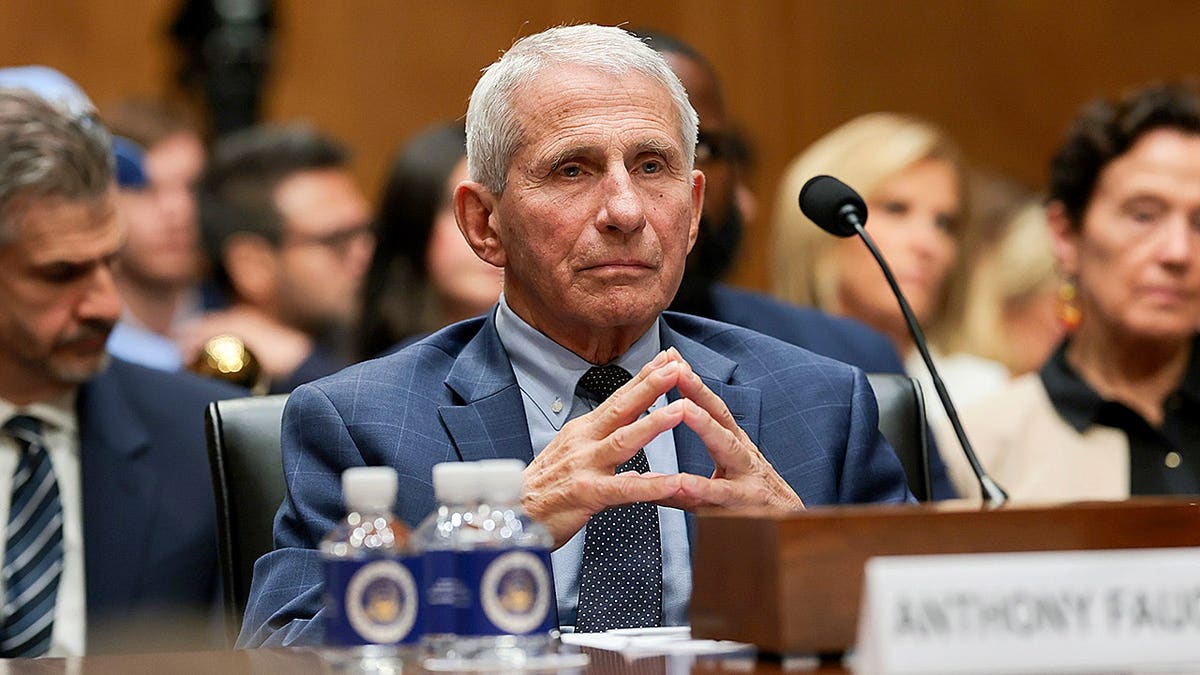
Former National Institute of Allergy and Infectious Diseases (NIAID) Director Dr. Anthony Fauci listens during a Senate Homeland Security and Governmental Affairs Committee hearing on July 29, 2026, in Washington, D.C. Dr. Fauci declined to answer questions, asserting his Fifth Amendment right. (Anna Moneymaker/Getty Images)
Many previously echoed Fauci's view that questioning these conclusions was an attack on science. One leading columnist wrote a piece titled "The COVID lab leak claim isn’t just an attack on science, but a threat to public health."
When courageous scientists put their careers at risk — and some lost their positions — to voice their opposition to Fauci's policies, neither he nor these acolytes said a thing in their defense. Fauci did not defend them as fighting for science and the need to challenge orthodoxy. When their views were later embraced, they received no apologies, let alone reinstatement.
CLICK HERE TO DOWNLOAD THE FOX NEWS APP
For my part, I am not interested in hearing from scientists who remained silent as their counterparts were vilified, shadow-banned and fired. Their deep faith in science did not prompt them to defend those with opposing views, even though orthodoxy is the very antithesis of scientific thought.
Again, Fauci has every right to remain silent, but that does not make it right.
CLICK HERE TO READ MORE FROM JONATHAN TURLEY
Jonathan Turley is a Fox News Media contributor and the Shapiro Professor of Public Interest Law at George Washington University.
He is the author of the new book "Rage and the Republic: The Unfinished Story of the American Revolution" (Simon & Schuster, Feb 3, 2026), on the 250th anniversary of the American Revolution.on the 250th anniversary of the American Revolution.
He is a nationally recognized legal scholar who has written extensively in areas ranging from constitutional law to legal history to the Supreme Court. He has written over three dozen academic articles that have appeared in a variety of leading law journals.
Professor Turley also served as counsel in some of the most notable cases in the last two decades including the representation of whistleblowers, military personnel, former cabinet members, judges, members of Congress, and a wide range of other clients.
Professor Turley testified more than 50 times before the House and Senate on constitutional and statutory issues, including the Senate confirmation hearings of cabinet members and jurists such as Justice Neil Gorsuch. He also appeared as an expert witness in both the impeachment hearings of President Bill Clinton and Donald Trump.
Professor Turley received his B.A. at the University of Chicago and his J.D. at Northwestern. In 2008, he was given an honorary Doctorate of Law from John Marshall Law School for his contributions to civil liberties and the public interest.







 English (US) ·