
 1 hour ago
2
1 hour ago
2
After their 2024 election loss, Democrats are looking to improve in one area where Republicans have dominated in recent years: the social media landscape.
The Democratic National Committee has been working to grow its "Influencer & Creative" program, partnering with more than 500 creators to help amplify the party's messaging ahead of the 2026 midterms and going into the 2028 presidential election.
The effort reflects Democrats' push to better compete with Republicans online, where influencers and podcasters are becoming increasingly powerful. It also comes as concerns grow over transparency with influencers in the political arena.
Matt Rein, the DNC's first director of the program, told ABC News in an interview that one of his top priorities is to build out the program into a sustainable model long-term.
"The program ... was something that really needed to be built back up, and I think we've absolutely done that over the last year," Rein told ABC News in an interview.
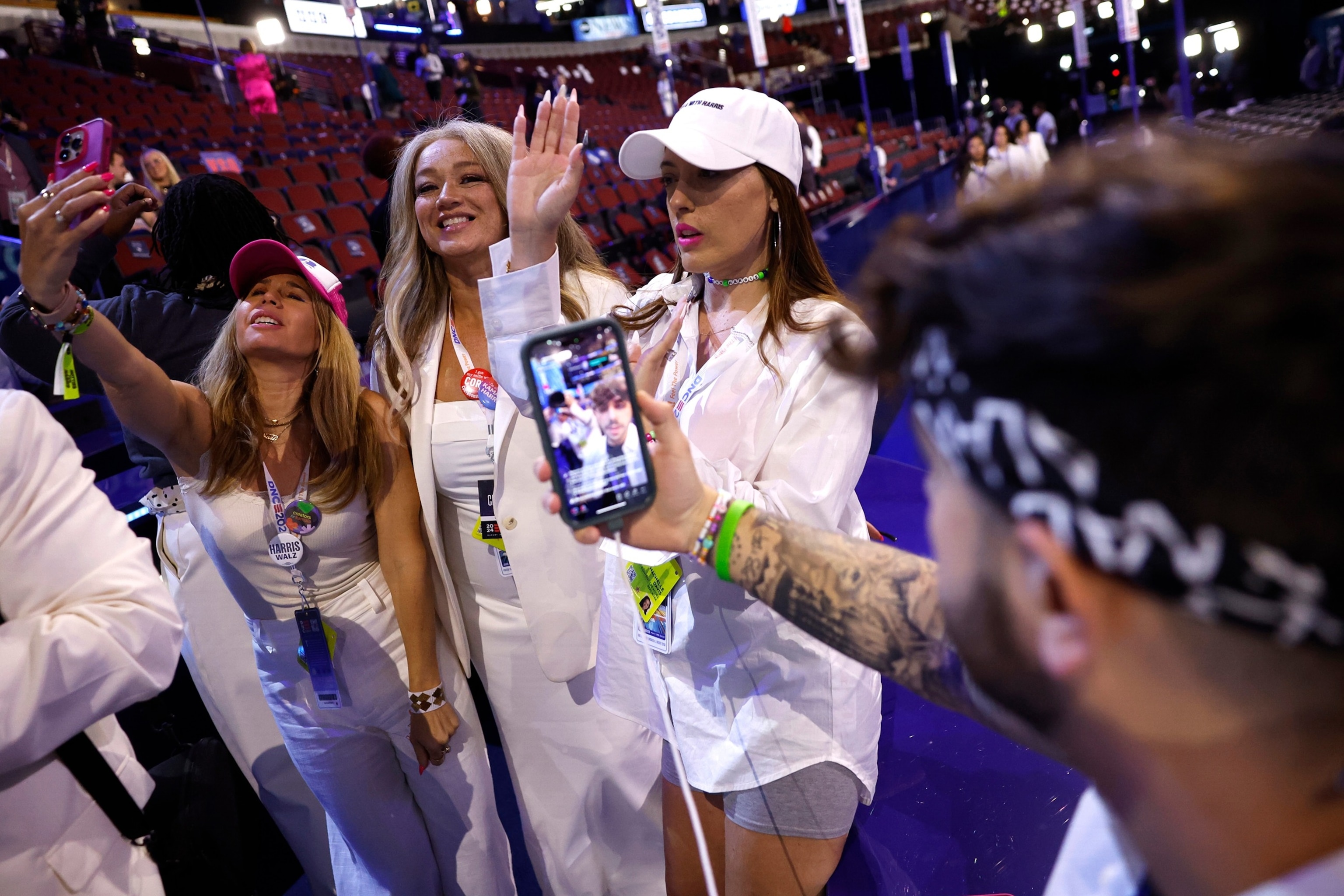
Social media influencers wearing white produce content during the final day of the Democratic National Convention (DNC) at the United Center on August 22, 2024 in Chicago, Illinois.
Kevin Dietsch/Getty Images
Rein told ABC News that there is no minimum number of followers that a creator needs to have to be part of the organization's program. Any creator that wants to be involved can be.
"We have folks in our Signal [chat] about 1,000 followers; we have people who have 10 million [followers], right? I think our focus is getting content to people who are reaching Americans every single day online and certainly I think we've done that," Rein said.
According to a Pew Research report published in November 2025, about 1 in 5 U.S. adults (21%) say they regularly get news from news influencers on social media.
Meanwhile, about 38% of younger adults, ages 18-29, are especially likely to get news from news influencers.
The DNC supports participating creators by providing political video clips they can share on their platforms, along with regular briefings featuring Democratic lawmakers and officials. Recent briefings have included Rep. Jason Crow discussing the Iran conflict with more than 30 influencers and Rep. Jamie Raskin speaking about his work related to the Jeffrey Epstein files.
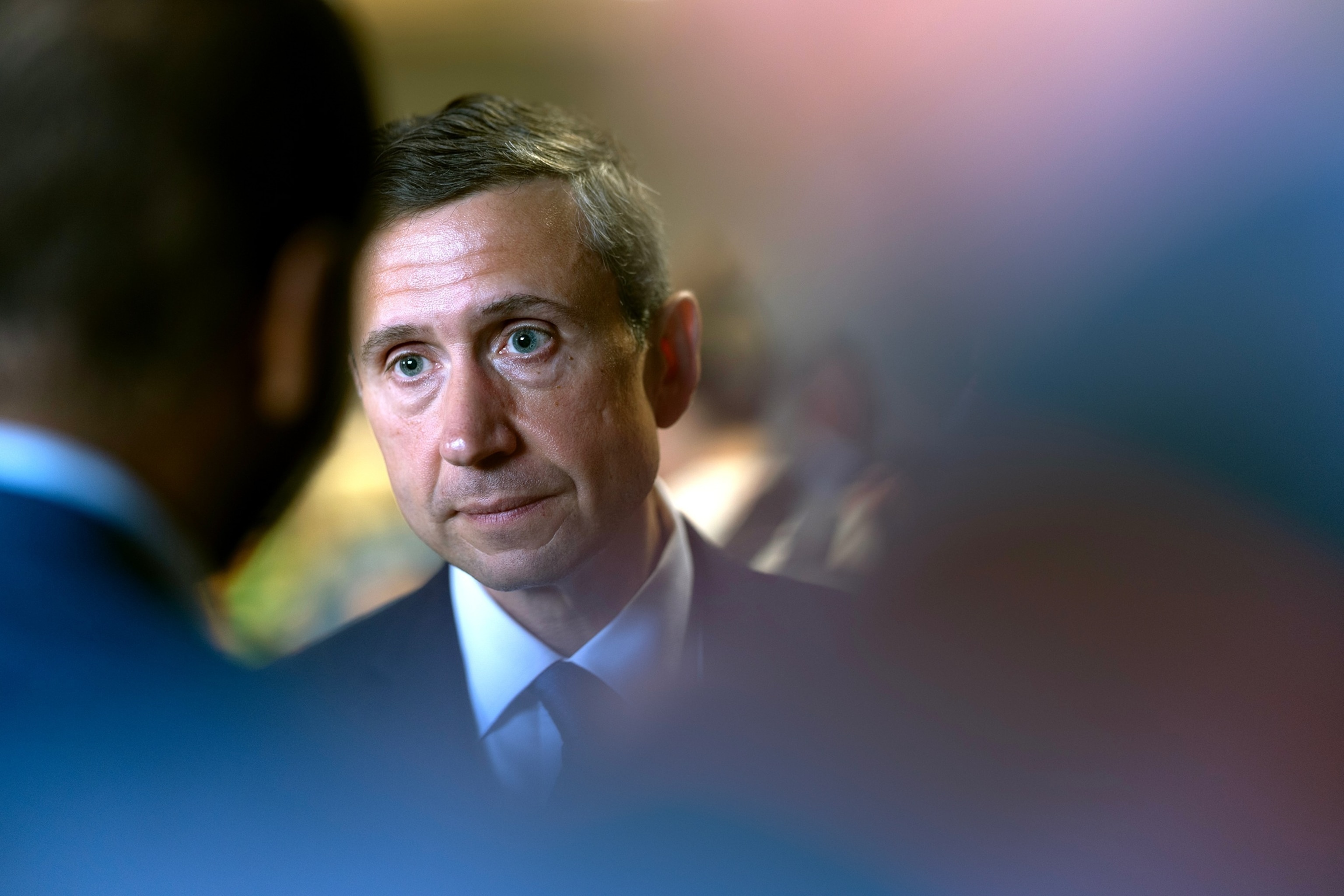
Ken Martin, chairman of the Democratic National Committee, speaks to the reporters following a press conference with Texas Democrats at the International Union of Painters and Allied Trades union hall on August 05, 2025 in Aurora, Illinois.
Scott Olson/Getty Images
At the DNC's winter meeting, they coordinated a creator hit with Arielle Fodor (who is known on TikTok as "Mrs. Frazzled" with 1.4 million followers) and former Vice President Kamala Harris.
As political campaigns continue to invest in digital creators, NOTUS has reported that the DNC is considering hosting a creator-led debate during the 2028 Democratic presidential primaries. Asked about the idea, Rein did not rule it out but said his current focus remains on expanding the creator network.
"I'm focused on '28 and focused on the future and building these relationships," Rein said.
Transparency concerns
The growing role of influencers in political campaigns has also fueled concerns about transparency in the creator economy, particularly around whether audiences know when campaigns or affiliated organizations are paying creators.
As of right now, there are no federal laws requiring social media influencers to disclose payments from a campaign or political entity.
Progressive activist and billionaire Tom Steyer faced scrutiny in the California gubernatorial primary for paying social media influencers to post favorable things about him. The Fair Political Practices Commission opened an investigation into Steyer's campaign for potentially violating a 2023 California law that requires online influencers to disclose when they're paid to support a candidate.
The New York Times reported in May that Carlos Eduardo Espina, an influencer with over 17 million followers across his platforms, endorsed Steyer in the California race. But what he did not disclose in his videos was that the Steyer campaign had paid him $100,000 as an adviser.
Espina is one of the most in-demand influencers in Democratic politics, having collaborated with nine possible presidential hopefuls. Espina did not respond to ABC's request for comment.
Videos that Espina posted online in support of Steyer included appearing on the campaign trail with the then-gubernatorial candidate, urging Californians to vote for him in the race, and saying he would bring "real change."
In response to reports that his campaign paid influencers, Steyer wrote on Substack in May that his campaign did not pay influencers for their endorsement; rather, it paid them for the time they spend working on his campaign.
"We compensate them for their work and their time, just like campaigns pay staff, consultants, media firms, strategists, and vendors across every part of politics. Every creator we compensate has been and will be publicly disclosed as required by law," Steyer wrote.
Steyer was defeated in the June primary, failing to advance to the November general election after spending hundreds of millions of dollars of his own money to his campaign.
Last October, the Campaign Legal Center petitioned the Federal Election Commission to initiate a rulemaking that would require influencers' political ads to include on-ad "paid for by" disclaimers.
Shanna Ports, senior legal counsel for campaign finance at Campaign Legal Center, told ABC News that it's becoming a more common tactic of campaigns, party committees and PACs to pay content creators to put out messaging.
"There is no disclaimer required on these influencers' posts at least on the federal level, which means that when voters are seeing messaging from influencers that they follow online," Ports said. "They have no way to know if that's the influencer organically supporting that candidate or if they have been paid to do so."
Rein told ABC News that the DNC does not pay influencers and is focused on building relationships with them, adding that there are no expectations or requirements that creators post the content shared with them.
"I think for us the most important thing, and I would say this, of you know, the broader ecosystem, is forming these relationships now with creators that will pay dividends, of course, this November and far beyond," Rein said.




 English (US) ·