
 1 hour ago
2
1 hour ago
2
‘The Olympic Village is one of the toughest places to get a good night’s sleep’
Katarina Johnson-Thompson

A Team GB heptathlete and indoor pentathlete, Johnson-Thompson is a two-time world champion, two-time Commonwealth Games champion and Olympic silver medallist in the heptathlon. In the indoor pentathlon, she is a world champion and two-time European champion. The 33-year-old relies on having a fresh head for fine-tuning the varied technical details of her seven events, from hurdles to high jump; things get sloppy without proper recovery, she says. She’s competing in the European Athletics Championships in Birmingham, from 10-16 August.
How many hours do you sleep at night?
I go to bed at 10pm and wake up around 7am. I have Sundays off and on Thursdays I don’t do anything that physical, so on those nights I’m a bit more restless.
Do you track your sleep?
I did for a while using a Whoop band, but I got too obsessed with it so I haven’t for a couple of years now.
Do you eat or drink anything before bed?
I’ve been doing a kiwi trend I saw online recently, where you have a kiwi fruit a couple of hours before bed, as it’s said they contain vitamins and antioxidants that can improve sleep quality.
Do you use any gadgets or sleep aids?
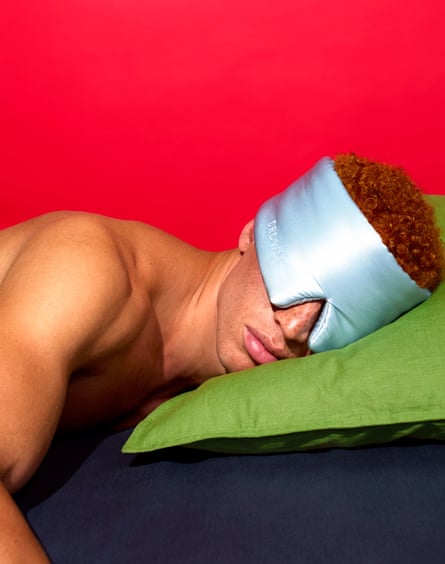
I use a satin blue sleep mask from Smug. I also recommend a weighted blanket, which stops you from tossing and turning.
How do you stay rested when you’re travelling to compete in different countries?
The morning you arrive, it’s important to open the curtains straight away so your body can adjust to the daylight. When it comes to staying in different hotel rooms, athletes are quite adaptable. It’s not a glamorous lifestyle. The Olympic village is probably one of the toughest places to get a good night’s sleep, because of the paper walls and cardboard beds.
How do you get a good night’s sleep before a big competition?
With the heptathlon, I do four events on the first day and three on the second. Sometimes there’s only 12 hours between the last event on the first day and the first event on the second day, so you only get four hours’ sleep. It can feel stressful, but if I’ve banked sleep in the week leading up to the competition – having 10 to 11 hours a night and topping up with naps – it helps me to relax.
What’s your top sleep tip?
The biggest piece of advice I’ve had is from Steve Peters, a psychiatrist I’ve worked with throughout my career. He says you can’t trick yourself into thinking that a competition isn’t a huge deal; your body knows it, your mind knows it. So you’ve just got to settle the worrying voice in your head. Before bed, I say to myself: “Now is not the time to think about this.” I’ll dedicate time slots the next morning to worry about the competition – at 8am, for example, when I’m cleaning my teeth.
Johnson-Thompson is taking part in a health campaign with Holland & Barrett, which is offering free in-store wellness checks.
‘If I’m trying to sleep on a plane, I’ll go on YouTube and play six hours of second world war history facts’
Adam Peaty
Peaty might be an Olympian with three gold medals, and the men’s 50-metre and 100-metre breaststroke world record holder, but he is also a dad. The 31-year-old has to juggle 6am starts with the trials of parenting. It means he is less focused on rigid bedtime routines than he is on sleeping deeply once he has drifted off.
How many hours do you sleep at night?
Last night, I got into bed at 8.30pm, because we’d just come off a weekend of racing. I was up at 6am this morning. But what a lot of people get wrong about sleep is that it’s not just the number of hours in bed; it’s the quality of it.
Do you track your sleep?
I wear a Whoop device, because it tells me what my sleep cycles have been and what sleep depth I’ve been in. We also have a sports science team, and we do blood biomarkers, and look at our natural testosterone, free testosterone [the type easily used by the body], melatonin and magnesium levels, which are all related to your circadian rhythm.
Do you eat or drink anything before bed?
I can put in place all the sleep tools I want, but that means nothing if I’m eating sweets before bed and filling my body with sugar. I eat about three hours before I put my head down so I’m not processing food while I sleep. Hydration is important, too. I’ve always got a two-litre chug next to me if I wake up in the night.
Do you use any gadgets or sleep aids?
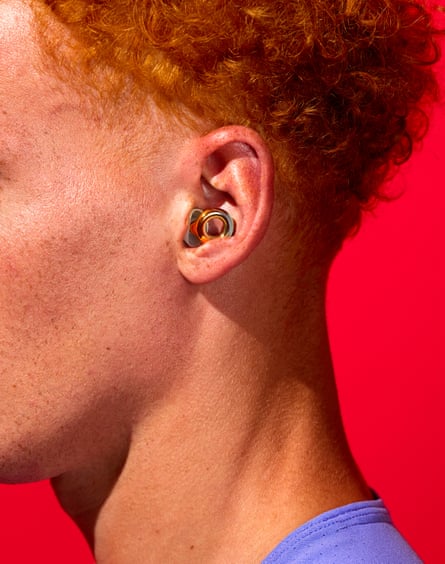
I use an eye mask to block out the light and Loop earplugs. I live in London, and all it takes is one loud noise to ruin your REM sleep cycle.
Have you bought any bedroom accessories to help you get a good night’s sleep?
I use three firm pillows: one in between my hips to keep them straight, to help with posture and alignment, one for my arm in front of me, and one for my head.
How do you stay rested when you’re travelling to compete in different countries?
If I’m trying to sleep on a plane, I’ll go on YouTube and play six hours of second world war history facts, and that will help me nod off. For the Olympics, the team will take our own pillows. When I race, I weigh around 95kg, which is a lot of weight on a bad mattress; we take our own mattress covers, too, to give the bed more support.
How do you get a good night’s sleep before a big competition?
There are more studies coming out around sleep debt and accumulating sleep. So we try to get two or three weeks of great, consistent sleep before a competition. But I’ve done incredible sets on four hours’ sleep. It’s about consistency rather than perfection.
‘Late kick-offs are a big challenge – your body needs time to calm down before you can rest’
Ezri Konsa

England defender Konsa, 28, helped Aston Villa win the 2025-26 Uefa Europa League – and England reach the semi finals of the World Cup. His sleep schedule is structured to help him stay sharp despite a demanding workload that includes a busy Premier League calendar, European fixtures and international duty.
How many hours do you sleep at night?
I usually aim to get at least seven to eight.
Do you use any gadgets or sleep aids?
I’ve always been pretty good at falling asleep, so I don’t use any special gadgets. I do use a Whoop, though.
How do you stay rested when you’re travelling to play in different countries?
We stay in a hotel the night before every game, so it’s something I’m very used to. With jet lag, I try not to think too much about the time back home because I think that can make it harder to adjust. One of the biggest challenges is after late kick-offs. Even though the game has finished, your body is still full of adrenaline, so switching off and getting to sleep isn’t always easy. Sometimes your body needs to calm down before you can properly rest.
What about when you’re faced with a lot of pressure before a big game?
For me, it comes back to preparation. When you’ve prepared well throughout the week, you feel confident going into the game. Knowing I’ve done everything I can beforehand helps me relax, even before the biggest matches.
What’s your top sleep tip?
Consistency – trying to go to bed at a similar time every night.
‘I’ve invested in a good mattress that supports my back. It also has a cooling layer so I don’t get too hot’
Emily Campbell

Lifting weights that are heavier than a baby elephant means there’s no margin for error for 32-year-old weightlifter Campbell, who is competing in her third Commonwealth Games this summer in Glasgow, from 23 July to 2 August. The Olympic silver medallist – who is the first female weightlifter to win six consecutive European titles – says the sport can be dangerous if you’re feeling lethargic.
How many hours do you sleep at night?
I’m in bed by 9.30pm and fall asleep between 10pm and 10.30pm. Then I will sleep through until about 8am.
Do you track your sleep?
On my training days, I fill in a questionnaire in the morning and submit it to my coach. It has questions like, “How alert and ready do you feel today?”, “Do you feel irritated or stressed?”, “Do you feel like you slept well last night?” If I’ve said I didn’t sleep very well and I’m feeling irritated and tired, then they’re not going to hit the freak on me that day.
Do you eat or drink anything before bed?
I have a peppermint and honey tea before bed, and I always take my daily vitamins – usually vitamin D and glucosamine (a natural compound in the body found in cartilage) and two scoops of creatine.
Do you use any gadgets or sleep aids?
I’ve invested in a good mattress, which is the right firmness that supports my back. It also has a cooling layer to regulate my temperature so I don’t get too hot.
What do you avoid before bed?
Going to bed hungry. If you’re fuelled properly, you’ll train better, and then you’ll sleep better.
‘Picking some mint leaves before bed is a little routine’
Henry Pollock
You might think that after battling brutal tackles, the Northampton Saints and England rugby union player Pollock would be too sore to fall asleep. The opposite is true. “As soon as I hit the pillow, it’s proper switch-off time,” he says. The 21-year-old is playing in the inaugural Nations Championship this year, which continues on 18 July.
What time do you go to bed, and how many hours do you sleep at night?
On a working day, I’ll go to bed at 10.30pm and then wake up around 7am.
Do you track your sleep?
I track it most nights on my Apple Watch – how deep it was and how many times I woke up.
Do you eat or drink anything before bed?
I try to avoid eating too close to bed, because your stomach can take a long time to digest it and your body’s going to be awake. But my last meal is usually a protein hit. I’m playing around with having a protein shake towards the end of the day, or yoghurt with fruit and granola.
Do you use any gadgets or sleep aids?
I wear earbuds to make sure it’s nice and quiet. If I’m on tour and I’m away from my normal bed, I’ll wear an eye mask as well.
What do you do to wind down before bed?
I live with one of the other boys on the team, so we’re able to wind down by talking about anything other than rugby. I have also got my own herb garden where I grow rosemary, chives and mint. Picking some mint leaves and having a mint tea before bed is a little routine.
How do you stay rested when you’re travelling to compete in different countries?
I’ll take a collagen shot before bed when we’re in camp, which helps with relaxation and muscle recovery.
after newsletter promotion
What do you avoid before bed?
I try to turn my phone off about half an hour before and read a book instead.
‘We often play at weekends when other people are on a night out. Earplugs are essential’
Amy Jones
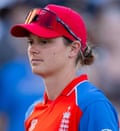
International cricketer Jones – one of the most capped players of all time – can go to bed with aching legs after evening matches, such as this summer’s ICC Women’s T20 World Cup. A wicketkeeper, she can squat nearly 300 times while playing – and will often finish pumped full of adrenaline.
How many hours of sleep do you get at night?
T20 matches can go on much later than usual working hours, and sometimes our training doesn’t finish until 9.30pm, so it can be harder to get into a routine and the adrenaline can keep you up. On those days, you can still be up into the early hours and then have a big sleep in. When we’re not playing, I’ll be in bed by 9pm.
Do you eat or drink anything before bed?
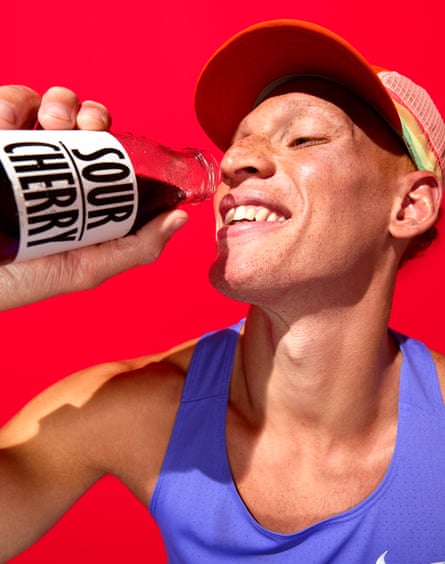
Some of the girls take sachets of sour cherry juice or gel, which is sleep-inducing and aids recovery.
Do you use any gadgets or sleep aids?
During one of my first T20 World Cups in the West Indies, I got really into sleep meditation apps. The games were starting at 8pm, which meant we didn’t get into bed until 2am. I had a lot of adrenaline, so I started using the Calm app. It helped me to relax. Some players only sleep one or two hours after games because it can be hard to switch off.
How do you get a good night’s sleep before a big competition?
When we’re playing, we move around to different cities and hotel rooms. In the English summer, our games often fall on weekends, so while we’re trying to get ready for an international the next day, other people in the hotel are on a night out or having a holiday. It can be very noisy, so earplugs are essential. I use Happy Ears ones. You never know if you’re going to get a hard hotel bed or a soft mattress until you turn up. It’s a bit of a lottery. Sometimes we’ve had to sleep on the floor, if the mattress was too soft.
What do you avoid before bed?
Caffeine is a big one for me, so I try not to have any coffee after 3pm.
‘I like to have a bath – I find it a good de-stresser. I’ll usually add epsom salts’
Harriet Dart

Getting a good routine comes with challenges for British tennis player Dart. The season spans January to November, and demands regular long-haul travel for nearly back-to-back tournaments. The 29-year-old is going to the Prague and US Opens this summer after having taken part in Wimbledon.
What time do you go to bed, and how many hours of sleep do you get at night?
I’m in bed by 9.30pm to 10pm, sometimes earlier depending on how the training day has been. If I have a match in the evening, say after 7pm, then I’ll shift my clock. I’ll purposely go to bed pretty late and wake up later so I’m not too tired for the match.
Do you track your sleep?
I don’t, but when I train, the first thing my coach will ask is how I slept that night.
Do you eat or drink anything before bed?
I always have a mint tea; it relaxes me and helps with digestion.
Do you use any gadgets or sleep aids?
I wear a silk eye mask. When I’m finding my mind is more active, it seems to help me shut down. I like it to be totally pitch black when I sleep, so it’s useful when I’m travelling. I can use it on planes and in hotel rooms that have more light. I have blackout blinds at home.
What do you do to wind down before bed?
I like to have a bath – I always find it a good de-stresser. I’ll usually add epsom salts. I used to do meditation before playing, but found it made me quite sleepy before matches. So when I’ve been struggling to sleep, I’ll use meditation techniques like breathing and body scans, which makes me really sleepy.
How do you stay rested when you’re travelling to compete in different countries?
Jet lag is always really tough. If I’m adjusting to a different time zone, I’ll do most of my training at the start of the day, and I’ll work in short, 20-minute naps to give myself a boost. Everyone reacts differently to travelling. I swell a lot on planes, which can stop me sleeping, so I wear compression socks. I also make sure I eat more on my recovery days so I’m really building myself and I feel good. I try to set the same temperature everywhere I stay to have some consistency.
How do you get a good night’s sleep before a big competition?
With experience, I think I’ve been quite good at compartmentalising things – I try not to think about matches until the actual day, or once I get to the venue, just because it’s an added stress you don’t need. I think what’s also important for me to remember is that I’ve had some of my best results when I’ve not slept that much. I wouldn’t say it’s sustainable, but for one or two matches it’s OK. The adreneline will take over.
‘I don’t give space for emotions to creep in. I’ll also watch a really easy show like The Office’
Tom Dean

The training regime of triple Olympic gold medallist freestyle swimmer Dean is relentless: four hours in the pool and two hours in the gym most days. It’s a plan that needs huge amounts of rest to power it – so his bedtime is optimised down to the minute. He will be competing at the Commonwealth Games.
What time do you go to bed, and how many hours of sleep do you get at night?
My lights are out before 10pm, and my alarm goes off at 6.30am. The only time this shifts is when we go away for competitions. World championship and Olympic finals can go on late. You might not race until 10pm or 11pm. I’ve been at world championships where I was racing late in the evening, then you have medal ceremonies, then doping control and physio. By the time you’ve got back to where you’re staying, refuelled and dealt with the emotional toll of everything that’s happened, it can massively affect your sleep schedule.
Do you track your sleep?
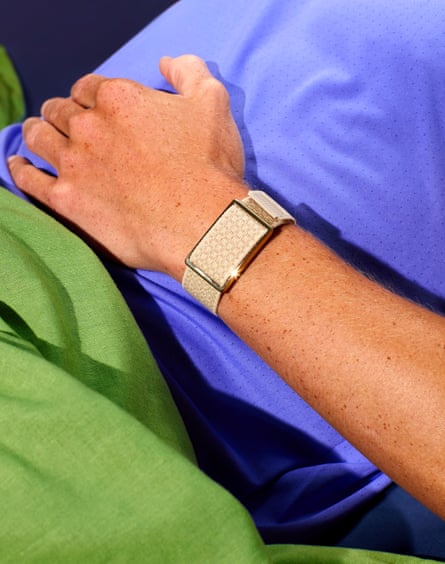
I had an Oura ring, which was brilliant, but I lost it at the Paris Olympics. Now we have been given Polar Loop monitors, which provide sleep scores for our physiologists.
Do you eat or drink anything before bed?
If I don’t have a big feed right before I sleep, then I’ll wake up hungry – normally at about 3am – and I have to get up and go to the kitchen and make some food. Before bed, I go for full-fat Greek yoghurt with fruit, granola, peanut butter, nuts and seeds. Sometimes I’ll add a sachet of sour cherry juice. It’s 600 calories. Some days I eat between 6,000 and 6,500 calories in a day.
What do you do to wind down before bed?
I’m a big believer in not spending any time in my bedroom unless I’m sleeping. I’ll spend all my time relaxing in my sitting room, reading or watching shows, and then I’ll only go into my room to sleep. I always try to sleep in a cold room with my window open.
How do you stay rested when you’re travelling to compete in different countries?
The first three days after you land, you cannot have a nap. That’s a rule I’ll live and die by. When it’s daytime, it’s important to get daylight. You can use caffeine to your advantage. We get told to drink it in the morning up until midday for the first couple of days.
How do you get a good night’s sleep before a big competition?
I try to stick to routines, like packing my bag the night before, or going through my race process in my head and my timeline for the following morning, so I don’t give space for these emotions to creep in. I’ll also watch a really easy show like The Office, or play cards with the other swimmers to take my mind away from the competition.
What do you avoid before bed?
I don’t drink alcohol. In my off-season, if I were to have a beer, I’d definitely feel the effects on my sleep. I also steer away from processed foods as much as I can.
‘I listened to Charlie and the Chocolate Factory every night for the first 10 years of my life – now I always have to listen to something when I go to bed’
Alex Yee

Team GB’s Yee is the most successful Olympic triathlete ever, winning silver at Tokyo 2020 and then gold at Paris 2024. Last year at the Valencia marathon, he became the second fastest Briton to run the distance, behind Mo Farah. Even with an exhausting training regime of more than 40 hours of running and cycling each week, sleep is something the 28-year-old struggles with – he often wakes up in the night with racing thoughts. He’s preparing for the world triathlon championship series in London on 25 July.
What time do you go to bed, and how many hours do you sleep a night?
I go to bed at 11pm most days, and try to get around seven and a half hours of sleep.
Do you track your sleep?
I normally wear a Coros watch, and when I’m competing, I’ll do daily monitoring with our national governing body, which tracks our sleep, how ready we feel to train and our hydration score. Day-to-day, however, I’m quite relaxed about it.
Do you eat or drink anything before bed?
I take cherry juice around competitions and when I’m doing a lot of long-haul travel. It has lots of antioxidants in it, and if you’re trying to get sleep between multiple days of competitions and aim for pure recovery, it’s a gamechanger. They claim it gives you 30 minutes more deep sleep per night, and I can see a difference when I take it. I take collagen throughout the day, for bone and tendon health. I’ve tried different magnesium supplements, but I didn’t notice a difference, personally.
Do you use any gadgets or sleep aids?
I don’t know whether it’s because I started going to bed with an audiobook when I was younger – I listened to the first chapter of Charlie and the Chocolate Factory every night for the first 10 years of my life – but I always have to listen to something when I go to bed. I prefer to listen to voices, so I’ll usually play a podcast, an audiobook or a YouTube video.
Is there anything you avoid before bed?
You should hydrate effectively, but not let it eat into your sleep, in terms of waking up and going to the toilet. So I try to hold off fluids for the last 90 minutes before bed.
How do you get a good night’s sleep before a big competition?
The things that impact a race the most are emotional stress and cortisol levels. You don’t want to be using up a lot of emotional energy going into a race and then landing on the start line exhausted. One of the things that creates that emotional exhaustion is being frustrated by trying to sleep and not being able to. So I try to have some calmness around my relationship with sleep and understand that two days before a race it probably isn’t going to have too much of an impact. It was something we all had to adapt to quickly at the Paris Olympics. We had to wake up at 3am to find out if our race was going ahead because of the water pollution in the Seine. So, over that period, you just had to try to stay as relaxed as possible, understand that everyone was in a similar position, and that it’s all about how you respond to having too little sleep.








 English (US) ·