
 4 hours ago
2
4 hours ago
2
A defining image of resistance in Donald Trump’s second term is a pastor recoiling as he is shot with pepper balls outside an Immigration and Customs Enforcement (ICE) facility.
Religious activism has also played out in court, with interfaith organizers launching a flurry of lawsuits against Trump-era policies that they say violate their beliefs, from abortion access to sanctuary for undocumented immigrants. While social conservatives have actively used “religious liberty” to limit LGBTQ+ rights and contraceptive coverage – in high-profile cases that have reached the US supreme court – progressive faith communities are increasingly leveraging religious freedom laws to fight for racial and social justice causes, too.
Religious Freedom Restoration Acts, which are active in more than half of US states, were enacted precisely to provide a “wide range of protections” for religious minority groups currently suing the federal and state governments, said Michael Helfand, a religion and ethics professor at Pepperdine Caruso School of Law.
“By definition, what these laws are trying to do is protect against government overreach when it comes to people’s ability to exercise religion,” Helfand said. “Current attempts to interpret the law are consistent with the way it was always intended to do.”
Below, five cases show how progressive congregations and organizers are asserting their religious freedom rights to protect civil liberties.
Protecting the Jewish right to abortion
Across the US south and midwest, faith groups have filed a series of class-action lawsuits to secure religious exemptions to, or completely strike down, state abortion bans.
In March, an Indiana judge blocked the state’s near-total abortion ban for plaintiffs whose religious beliefs conflicted with the law. The ruling came out of a lawsuit from Hoosier Jews for Choice, a Jewish reproductive justice group, and five women of multiple faiths.
Elly Cohen, the co-founder of Hoosier Jews for Choice, said laws restricting abortion violate Jewish law, which says life begins at birth, not conception – a principle that, in some circumstances, compels women to terminate their pregnancies.

Cohen herself had an abortion in 2022, just two months before the supreme court overturned Roe, after finding out the fetus had a severe chromosomal disorder and was not expected to survive birth. Carrying the fetus to term, she said, could have also put her life at risk.
“Jewish law frames a hierarchy of whose life matters,” Cohen said. “The life of the living person takes priority over the fetus, which is not considered a life but rather a part of the mother.”
Once Indiana’s abortion ban went into effect, Cohen said, many members of her group who had been eager to have children decided instead to go on birth control and delay starting a family. The law didn’t just target abortions, she said, but also prompted an exodus of OB-GYNs from a state that already has the country’s third-highest maternal mortality rate.
While the ban is blocked for now, the state has appealed against the ruling and the Indiana supreme court will take up the case in September.
Resisting ICE enforcement
Last February, dozens of Christian and Jewish groups filed lawsuits challenging Trump’s reversal of a longstanding “sensitive locations” policy that shielded houses of worship – along with schools and hospitals – from ICE enforcement. A year later, a judge blocked warrantless enforcement actions near some churches involved in the litigation.
“For us, terminating the policy is a fundamental attack against the religious freedom of our members and our churches,” said Rev Carlos Malavé, president of the Latino Christian National Network in Texas, one of the groups that’s suing the administration. “We thought, very clearly, that this is a time we need to take a stand on those fundamental rights that have been eroding increasingly.”

Everyone has a right to worship regardless of their immigration status, Malavé said. Fear of ICE raids has contributed to a sharp decline in attendance, he said, which has had a “domino effect” on a congregation’s morale and financial health.
“Attendance drops affect our income, the livelihood of pastors who live on the offering of members,” he said.
Religious groups are involved in a host of other major religious freedom claims related to immigrant rights, including cases from faith leaders seeking to shelter migrants and offer prayer and spiritual care to detainees at ICE facilities.
Protecting Native American sacred sites
For Indigenous activists in Arizona, the religious freedom law has been a centerpiece in a long fight to preserve access to Oak Flat, a sacred mountain the government has transferred to a mining company.
Wendsler Nosie, a San Carlos Apache tribe member and leader of the Apache Stronghold, said Oak Flat is where Indigenous nations gather medicinal plants and observe rituals like the Na‘ii‘ees, a four-day coming-of-age ceremony in which young girls dance and sing their way into adulthood. Destroying the mesa to mine for copper is detrimental to not only the Apache people’s way of life but also the environment, Nosie said.
“To make the American people who come from across the ocean understand, it’s the same magnitude as taking the Bible, burning it and plowing down Mount Sinai,” Nosie said regarding the development of Oak Fort into a copper mine.
The supreme court dealt a blow last year to the Apache Stronghold by refusing to consider a lower court’s ruling that cleared the way for the transfer of Oak Flat. But the group will continue to fight, Nosie said, with several other lawsuits seeking to overturn the land transfer and halt construction of the mine.
A 1988 supreme court decision has proven to be a notable roadblock for Native Americans seeking to preserve access to culturally and spiritually important sites, said Robert Miller, a tribal and federal jurisdiction law professor at Arizona State University. The court ruled that the federal government can do as it pleases on its own land, even if it infringes on Indigenous people’s ability to practice their religion.
“Tribal nations have always fought for the right to exercise religion on sacred sites,” Miller said. “They just usually lose.”
Opening harm reduction sites
Safehouse, a Philadelphia-based non-profit, has been in a years-long legal battle with the US justice department over its efforts to open a safe injection site, where individuals can consume illegal drugs under the supervision of medical professionals. The organization, whose board includes several faith leaders, has argued that it has a religious right to prevent opioid overdoses, driven by Judeo-Christian beliefs about saving lives and caring for the sick.
“We are pained that as the overdose death rate increases every year, the government is preventing us from following our deeply held religious convictions,” Safehouse board member Frank James III said regarding the lawsuit in 2023. “The data show that overdose prevention sites save lives, and we are committed to saving lives.”
The justice department has argued that the injection site violates the federal Controlled Substances Act, which prohibits the opening or maintaining of a site for the purpose of illegal drug use. An appeals court ruled last year that the religious freedom law applies to non-religious entities, allowing Safehouse to proceed with its religious liberty claim in district court.

Combating mandatory AI in the workplace
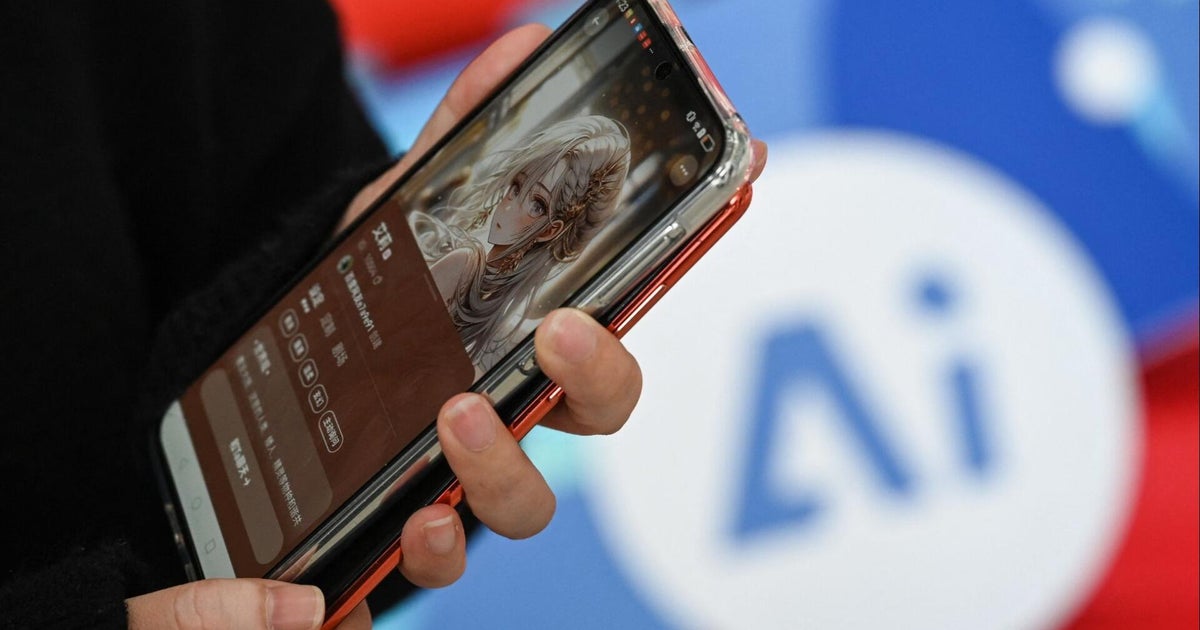
In a 42,000-word encyclical written in May, Pope Leo XIV warned that artificial intelligence threatens human dignity and workers’ rights. “It is not enough to invoke efficiency, nor to celebrate the benefits of innovation, if they are built on a chain of exploitation that remains deliberately hidden,” the pope wrote.
A month later, Erin Maus, a North Carolina software engineer , secured a religious exemption from her employer from having to use AI to write code, according to a report from Business Insider. Maus, a Unitarian Universalist, said she sought help from an employment lawyer and local minister to support her argument that AI tools cause environmental and ethical issues that violate her faith.
The Unitarian Universalist Association did not comment specifically on Maus’s case, but has said that technological advances should be “guided by an ethical understanding of humanity”.





 English (US) ·