 (2).jpg)
 7 hours ago
3
7 hours ago
3
Yoko Ono: Music of the Mind, a traveling retrospective on view at Los Angeles’s The Broad museum, features black and white footage of Ono’s 1964 Carnegie Hall performance of Cut Piece projected onto one of its walls. It was a landmark event in performance art history, in which the artist, aged 31, sat motionless on the stage as strangers took turns with a pair of scissors to cut away pieces of her clothing. As an emblem of the Fluxus artistic tradition, Cut Piece “relies on the audience’s actions to complete the performance”, says Sarah Loyer, curator and exhibitions manager at The Broad. This is precisely the work’s inherent risk: it leaves the artist’s body totally vulnerable to the viewer’s unpredictable whims. Consequently, as Ono herself told the art historian Ina Blom in a 1992 interview, “It is a frightening piece to perform.”
The tension in the footage is palpable, particularly as Ono struggles to retain her composure while a young man snips away at the straps of her undergarments. But as Loyer points out, “Looking at documentation of Cut Piece in the gallery, we are a step removed.” In order to convey the full impact of the piece, the museum is staging two Cut Piece live at the Redcat theater on 17 and 18 July to be performed by the Los Angeles based artist MPA.
MPA accepted the invitation from Ono’s studio with both a sense of pride and trepidation. As an artist who has mined the many ways political realities impact the body through political, durational and sometimes nude work, her primary concerns were neither Cut Piece’s physical implications nor demands. “I’m not scared of having scissors near me,” she says. Rather, her apprehension was more about how such a well-known piece – one that had inspired both the work of Marina Abramović, as well as an episode of The Simpsons – could feel not only her own but contemporary in 2026. “Can it still have that sting?” she asked herself. “Or will it just fall back into like a re-enactment?”
Since its debut in 1964, Cut Piece has been performed and reinterpreted by countless artists – notably twice by the musician Peaches, and six times between 1964 and 2003 by Ono herself. But Connor Monahan, director of Ono’s studio since 2008, cautions against referring to these as “restagings” or “re-enactments”.
“Every presentation of Cut Piece is a new performance,” he says, defined by the specific context of its audience, time and place. “Yoko didn’t conceive of the piece as something that would produce a fixed outcome or meaning. It ultimately becomes a work about the choices people make and how they participate, where they stop, what they hesitate over, and how they respond to one another. The instructions remain the same, but the people and the circumstances never do.”
As MPA found through research in preparation for Cut Piece, Ono’s own relationship with the work evolved dramatically over time. Looking at still images from the 1964 performance, MPA saw a potent sense of vulnerability in Ono’s eyes that grew noticeably less anxious as time progressed. “Initially, Yoko created the piece out of anger for the treatment of women’s bodies,” she adds, a sentiment that ultimately evolved into a gesture of peace. Ahead of her last performance of Cut Piece in 2003, when she asked the audience to send their piece of her clothing to a loved one as a gift, Ono wrote: “When I first performed this work, in 1964, I did it with some anger and turbulence in my heart. This time I do it with love for you, for me, and for the world.”
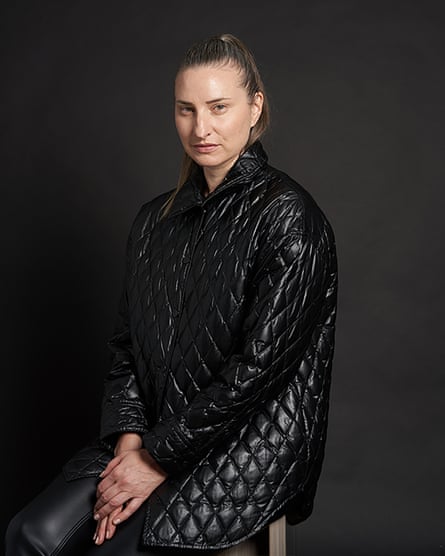
Looking back on her own practice, where early actions included standing motionless in a gallery for hours at a time (Directing Light onto Fist of Father, 2011) or laying her nude body onto shards of broken glass (A performance for Emma Goldman and Ulrike Meinhof, 2009), MPA recognizes a particular kinship in the violent subtext of Ono’s early work. “I was really working out the anger in my own heart. I had been raped and violated, and as a young queer person, I felt there were things that we had to fight for to exist, I think my art was closer to processing those all those feelings.”
But today, “Like Yoko, I like the place that my heart’s at now, which is maybe closer to holding the duality of anger and love,” she says. “A score like this gives you the opportunity to do both.”
As a “total offering” to her audience, Ono set the precedent of always performing Cut Piece in her best suit. For her own performance, MPA chose to wear garments by designers intimately familiar with war and state-sanctioned violence: one by the Mexican artist Victor Barragán for Saturday, and for sculptural costume by Moldovan designer Aliona Kononova for Sunday. As the date approaches, she has been carving out the appropriate headspace for the physical and emotional demands of the piece through meditation and long walks, tapping into her previous experience in figure modeling for painters in anticipation of Cut Piece’s stillness.
There is still no certainty in how the piece will unfold. “I think still the act of having like kind of cool cold scissors on me is going to feel provocative for me, and what that does for the audience, we will have to live and see how it feels,” she says. Aside from a slight gnawing concern that an audience member may try and clip her ponytail, her apprehensions have also noticeably cooled, in large part due to Ono’s own composure throughout the piece. “There really is such a potency in remaining wordless and having such a commanding presence. It really reaffirms for me within live art what our power is.”
-
MPA performs Yoko Ono’s Cut Piece at the Redcat theater, Los Angeles, on 18 and 19 July. Yoko Ono: Music of the Mind is at The Broad until 11 October





 English (US) ·